A look back at the BRIDGES x DATA TERRA school in the Comoros in December 2025
Towards FAIR, ethical, and sustainable research data management for Open Science
From December 15 to 19, 2025, BRIDGES organized the second school in the BRIDGES x DATA TERRA series in the Comoros, dedicated to FAIR, ethical, and sustainable research data management for Open Science.
The objectives of the training remain the same: to strengthen the skills of various academic, institutional, and other practitioners around the research data lifecycle, from collection to publication, in an Open Science approach based on FAIR principles, ethics, and sustainability, in connection with the BRIDGES program’s themes of fisheries, biodiversity, and marine socio-ecosystems in the Indian Ocean.
A look back at a week combining theoretical input, practical work, and experience sharing:
Day 1 – Context and challenges surrounding data
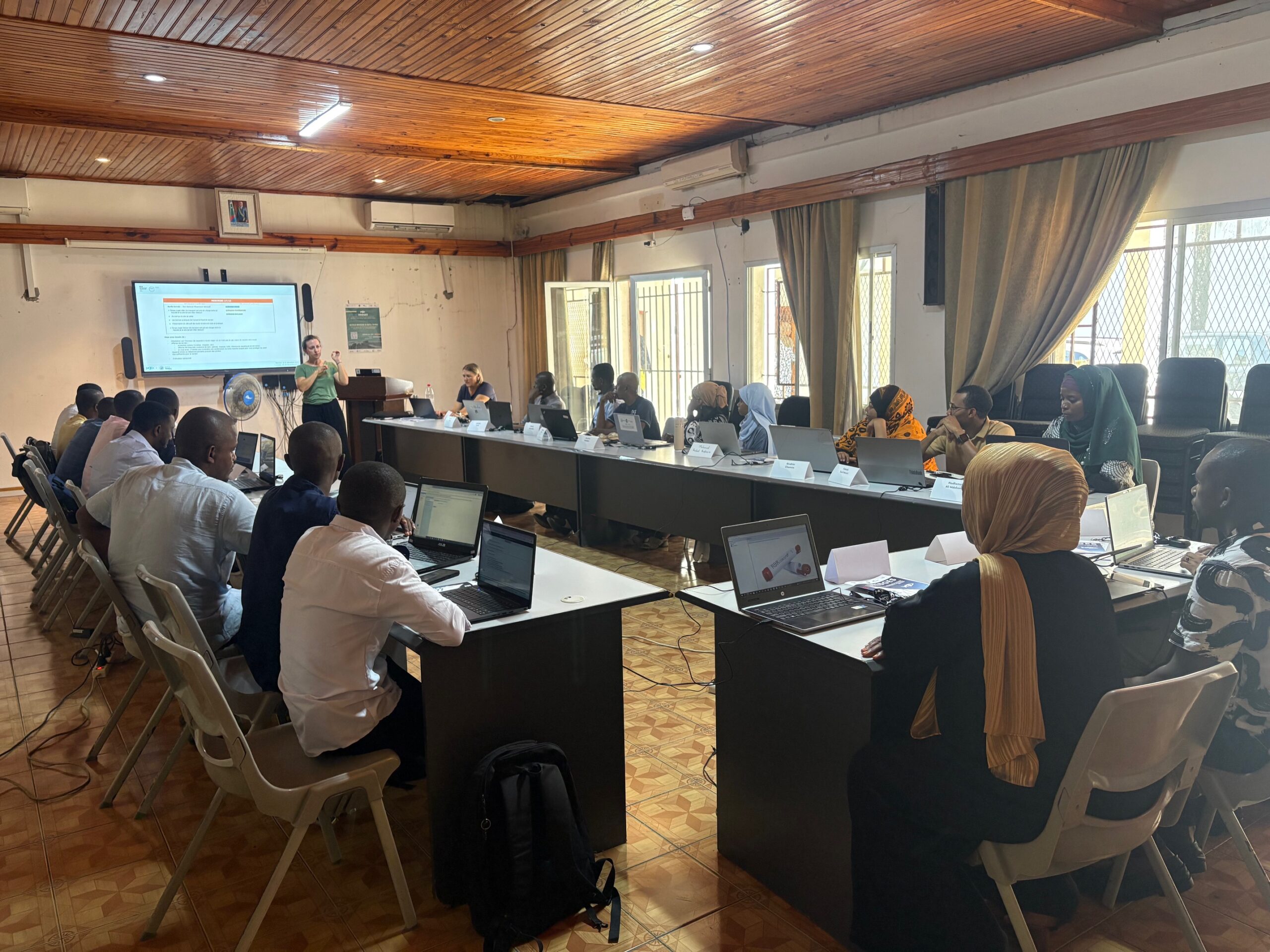
- Presentation of the Data Terra research infrastructure with Christelle Pierkot
- Discovery of the ODATIS Ocean Cluster and the Huma-Num SHS research infrastructure with Julie Furiga
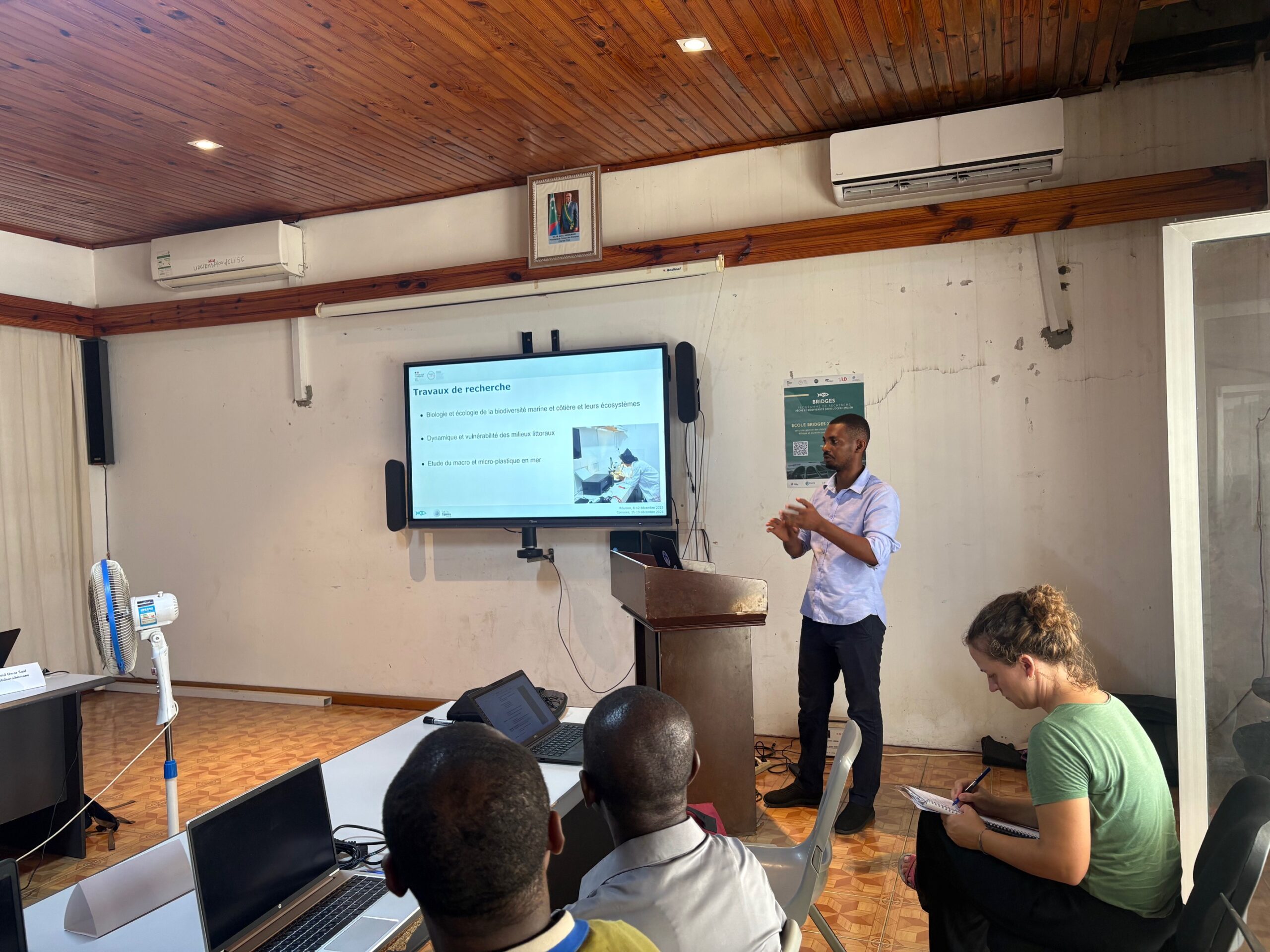
- Presentation of BRIDGES applied to the Comorian research context with Thomas Claverie and Nadjim Ahmed Mohamed
- Discussions with participants about their data management needs.
Day 2 – Between concepts and field preparation
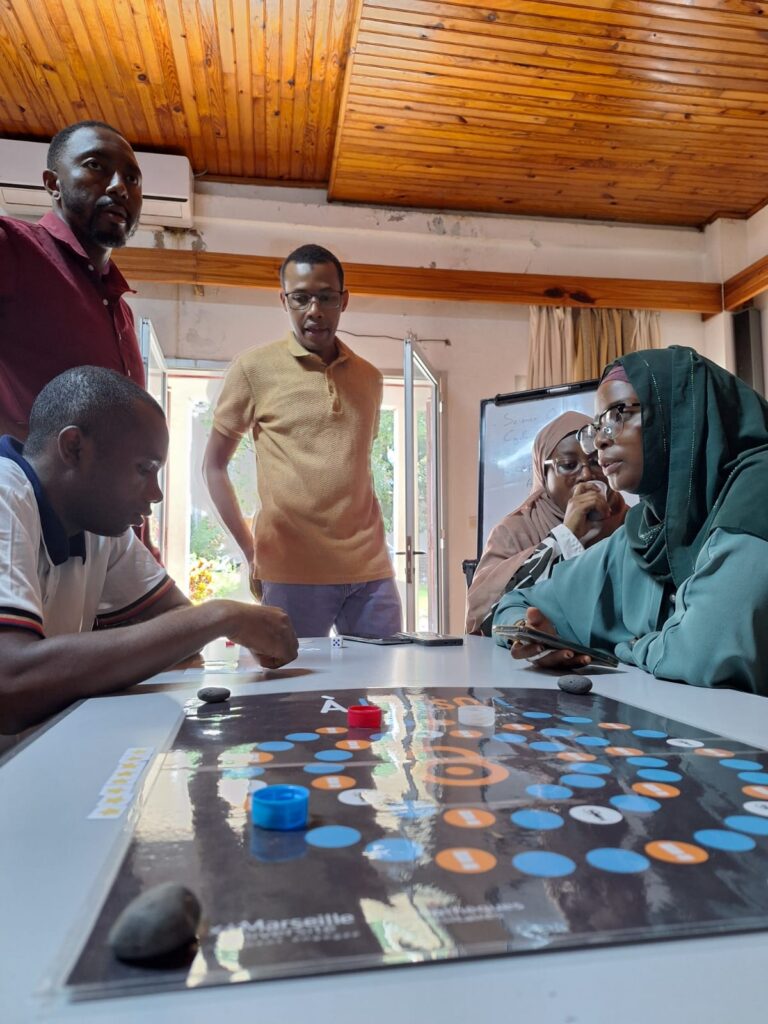
- Focus on the concepts of Open Science, FAIR principles, and data lifecycle based on the game “À l’asSO!”
- Presentation of research data from the Comoros related to BRIDGES themes
- Preparation of the field and best practices for acquisition
- Presentation of three working scenarios:
- BIOLOGY scenario with monitoring protocols on rocky habitats, seagrass beds, and reef habitats
- TEMPERATURE scenario involving the installation and programming of a sensor
- IMAGE scenario involving the acquisition of GPS data and underwater images and videos using cameras.
Photo : Activity featuring the game “A l’asSO!”
Day 3 – Field data collection: putting data collection into practice
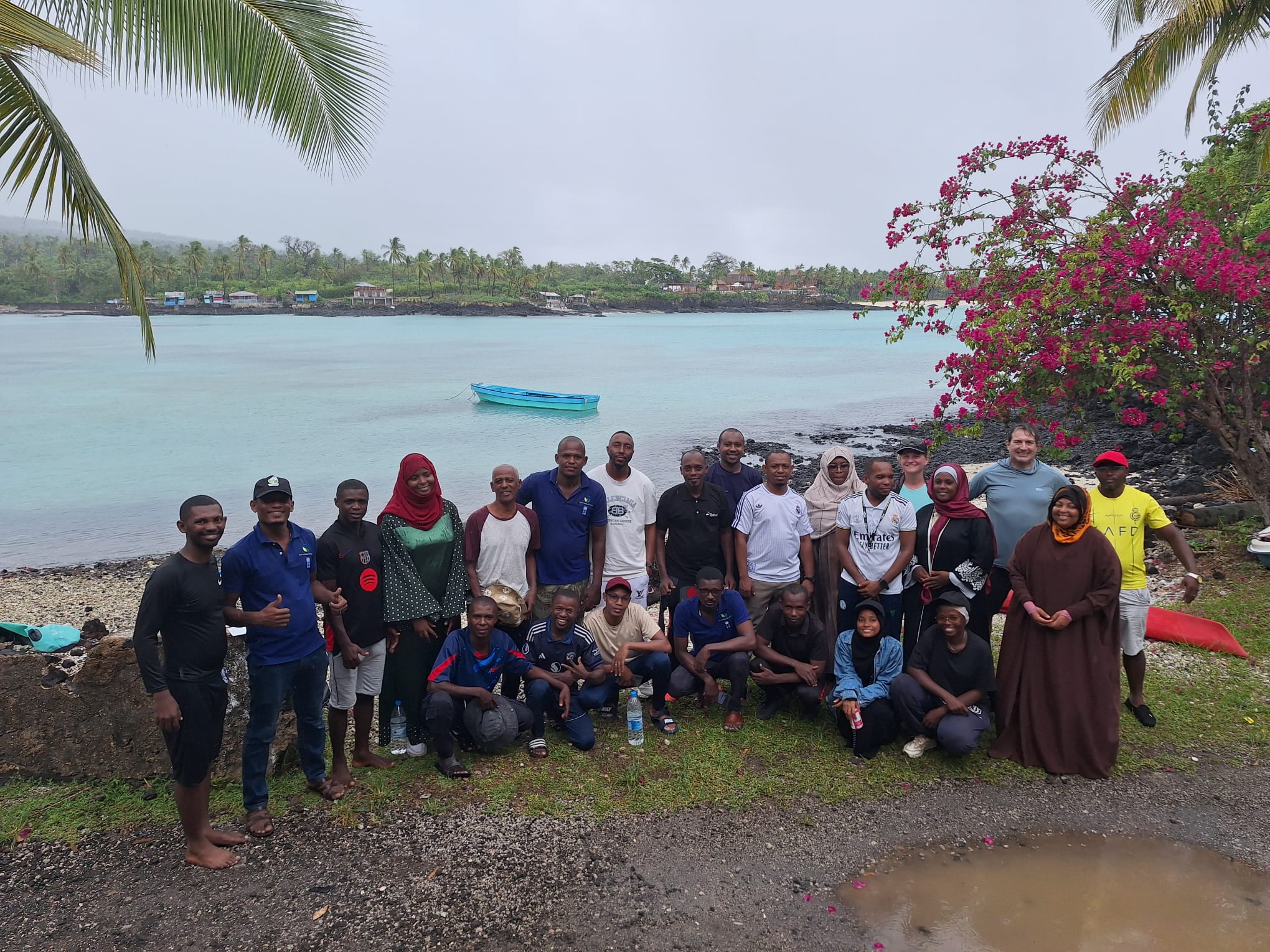
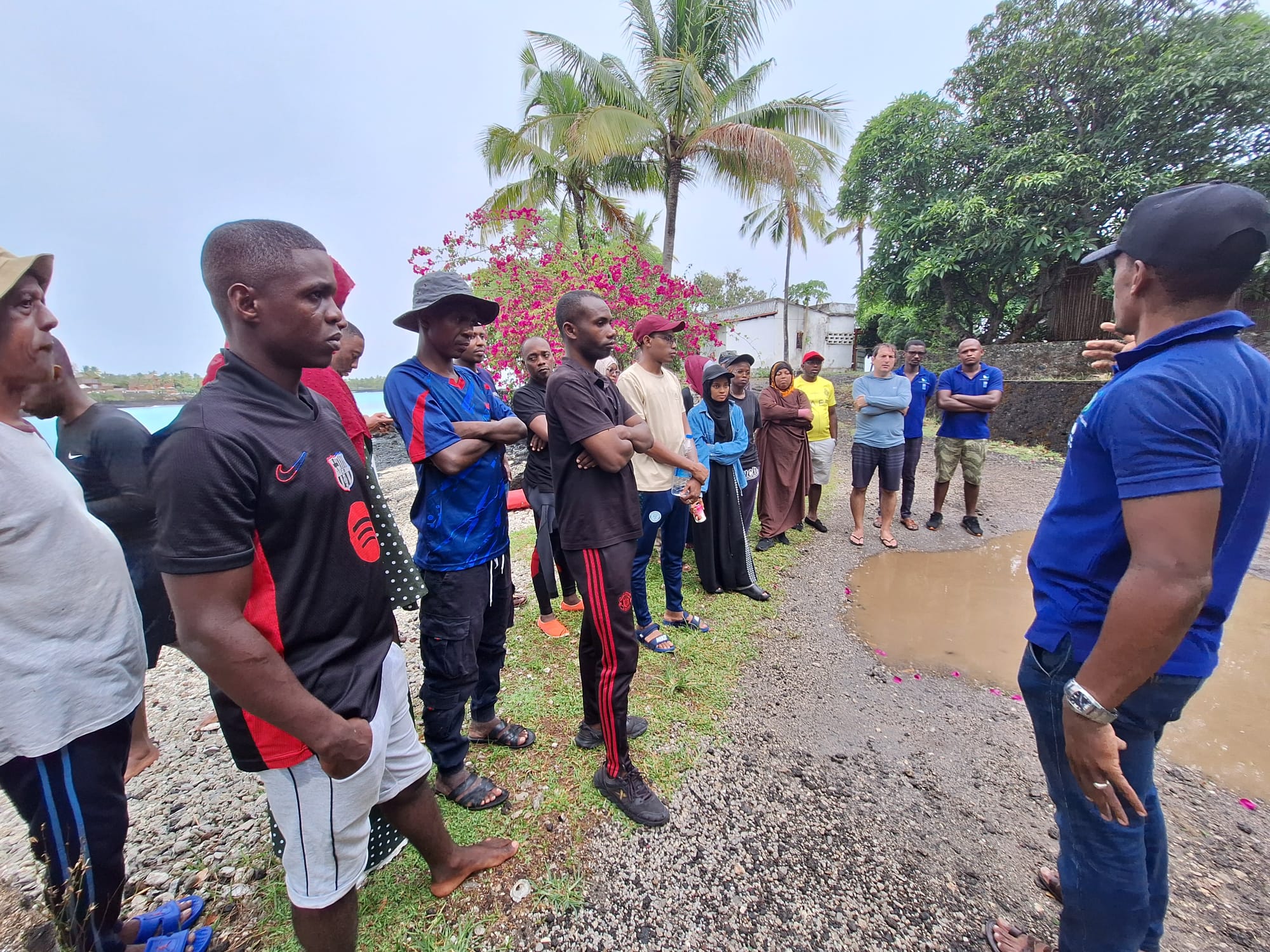
Field trip to Mitsamiouli-Ndroudé National Park (northern Ngazidja)
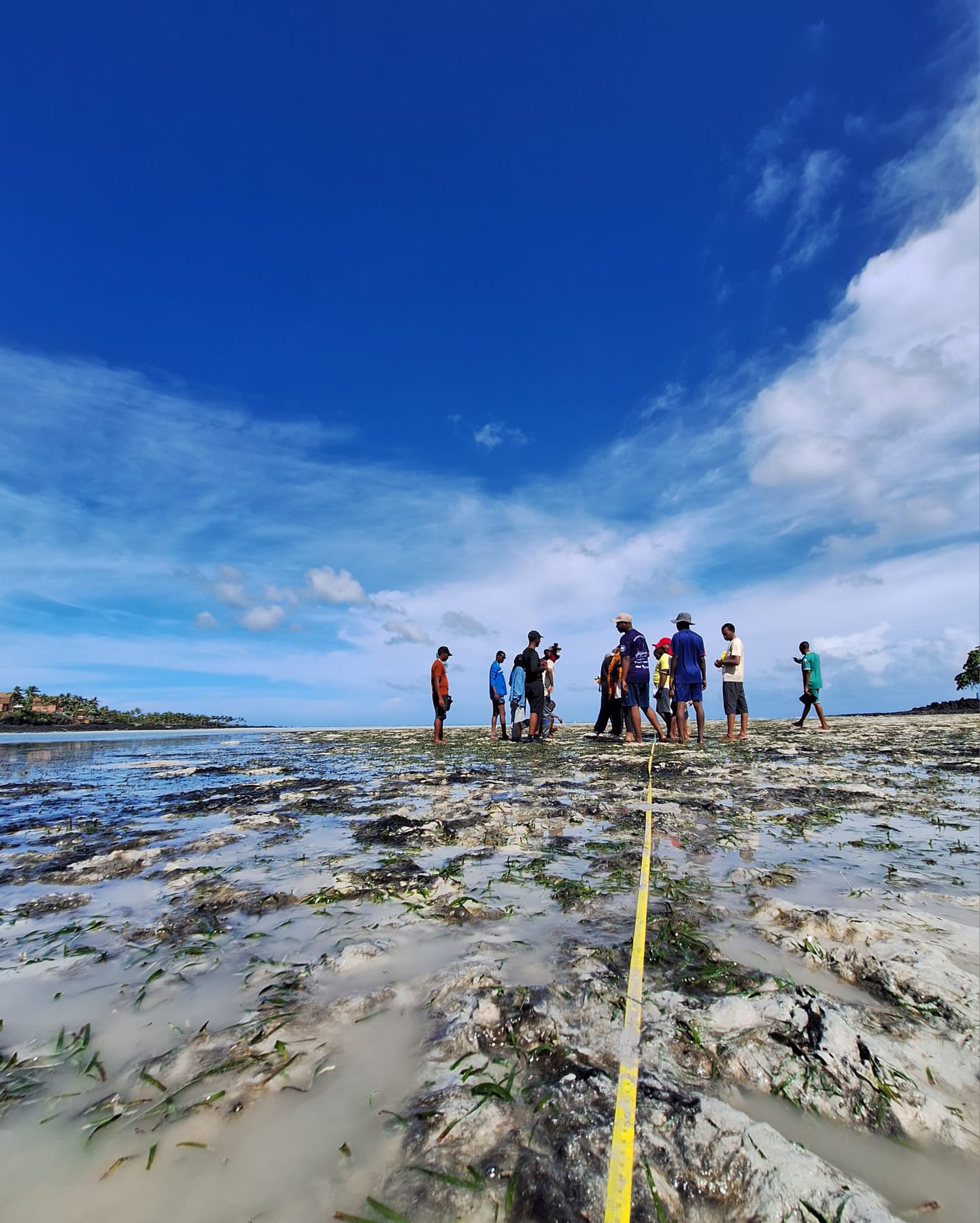
- Explanation of the different field protocols
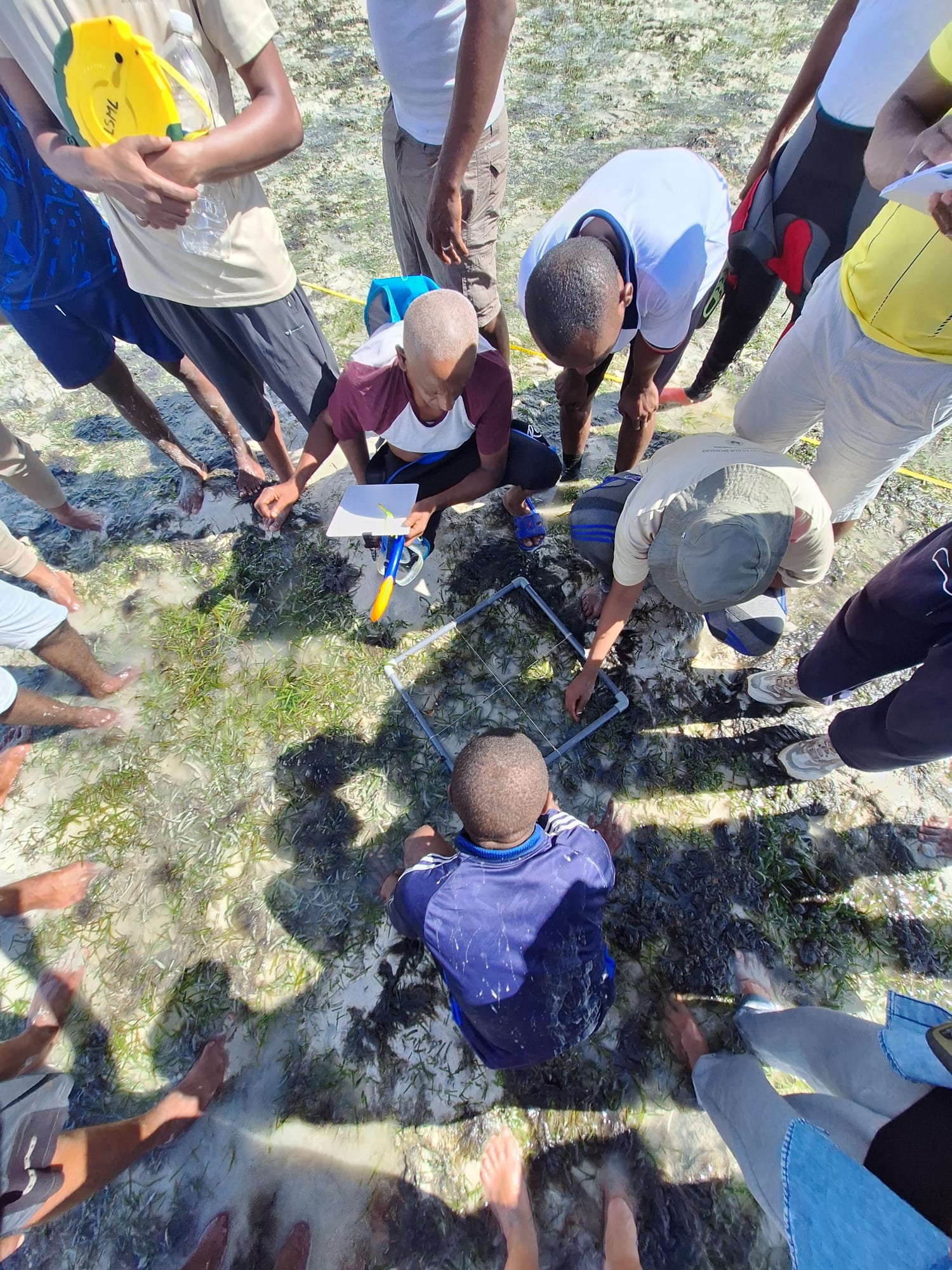
- Data collection at low tide:
- on the foreshore to identify the presence of algae and their coverage
- on rocks to identify the number and type of species
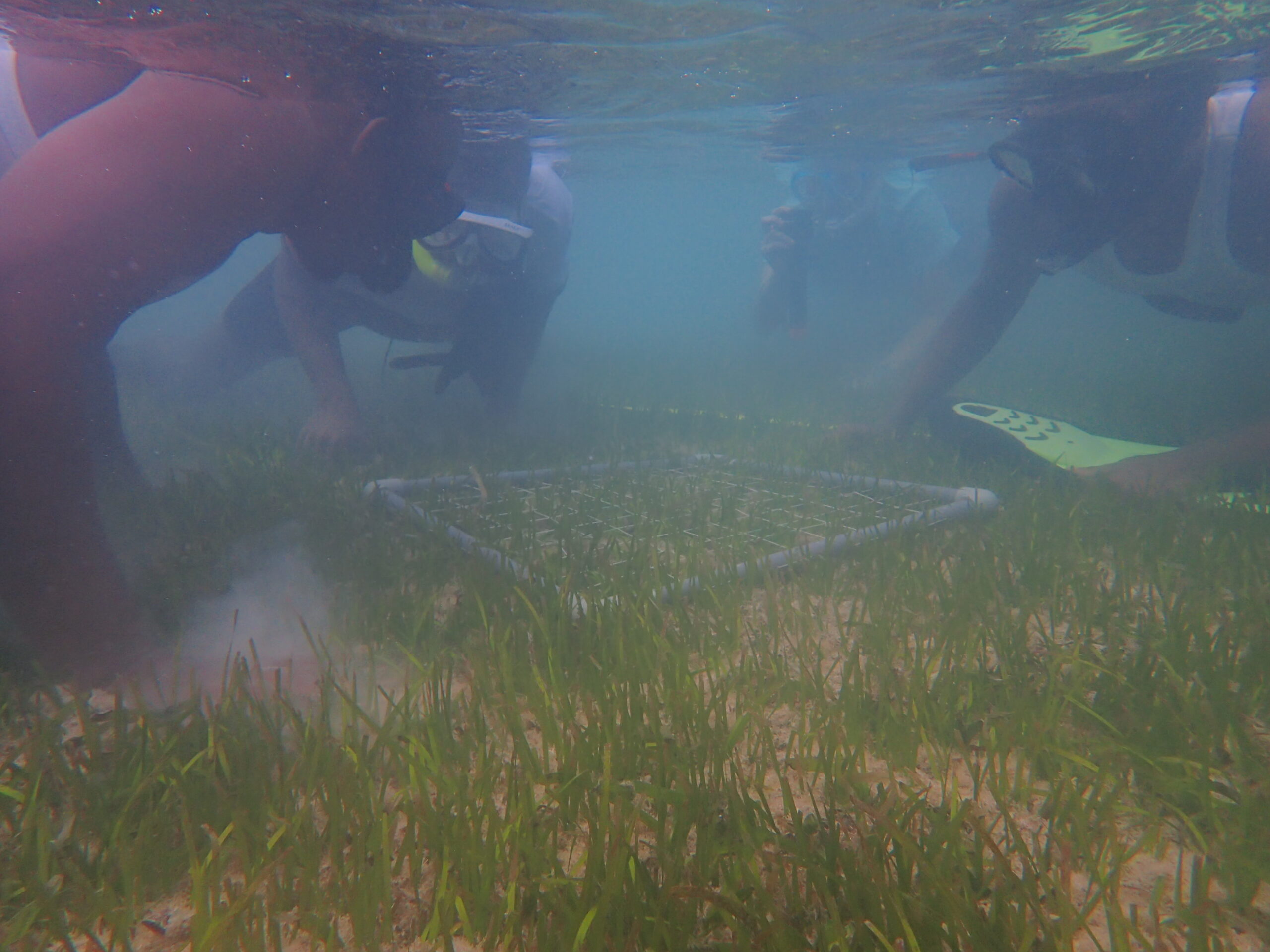
- underwater around the theme of coral and fish using snorkeling equipment along different transects. Placing the temperature sensor
Photo : Creating transects and quadrats to identify seagrass beds present on the foreshore as part of field data collection, Mitsamiouli-Ndroudé National Park
Day 4 – Data analysis and processing: best practices
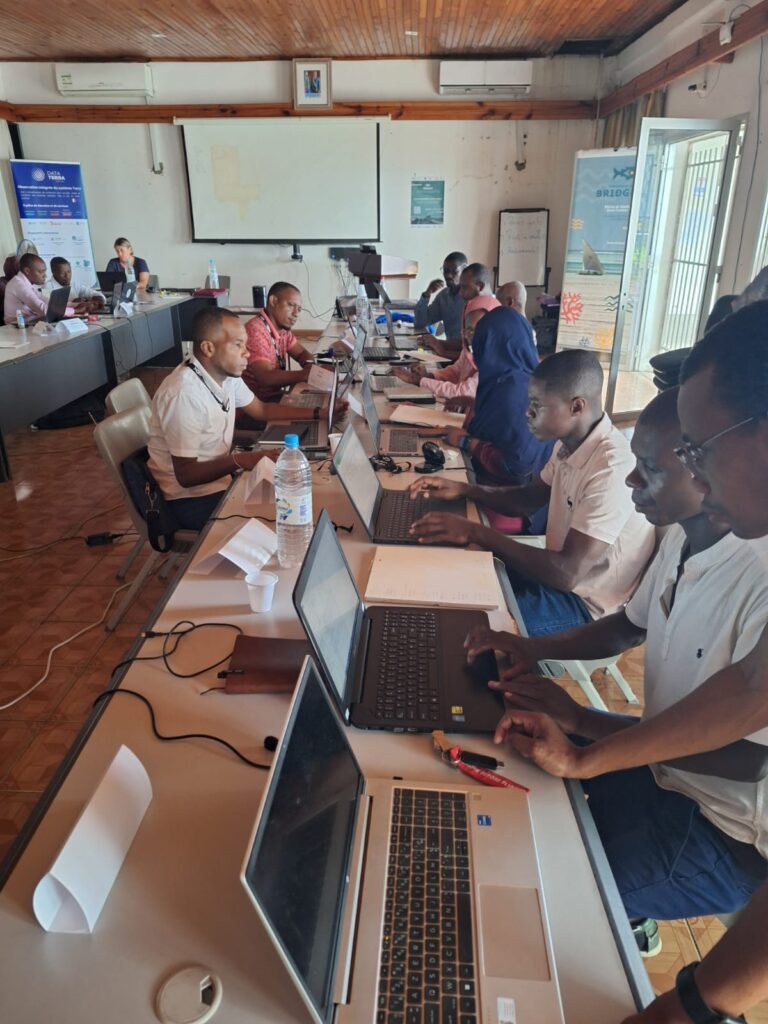
- Using OpenRefine tools to improve data quality and interoperability in the BIOLOGY scenario. Discovering the temperature data obtained in the field the day before.
Day 5 – Analysis and processing of georeferenced data and data publication
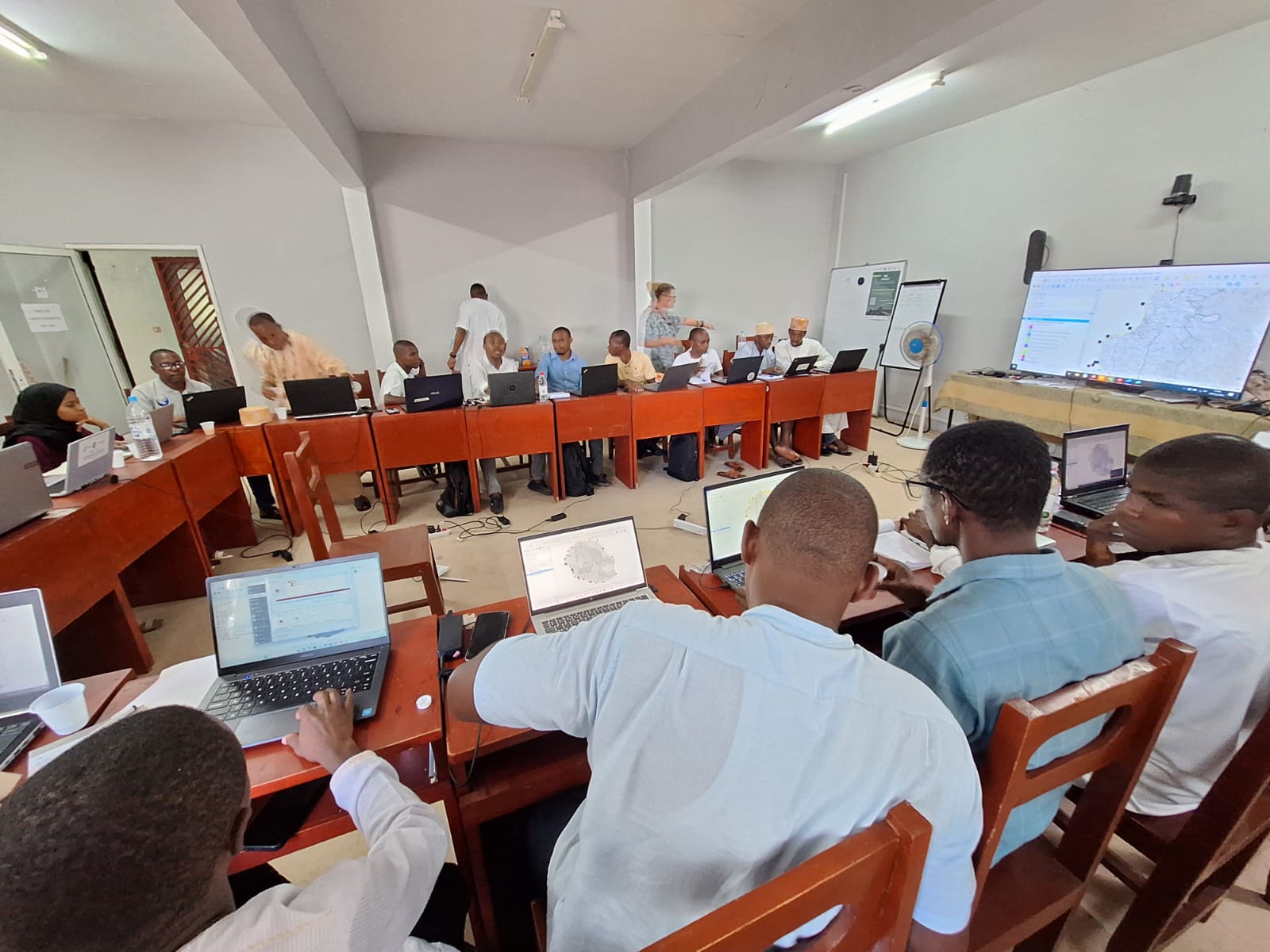
- Getting started with the QGIS tool using the IMAGE scenario
- Metadata, standards, licenses, data repositories and catalogs, persistent identifiers: Enhancing and making data visible, interoperable, and reusable
We would like to thank all the participants and speakers for their commitment, the quality of the discussions, and the richness of their contributions.
Key partners:
CNRS, Ifremer, IRD, Data Terra research infrastructure, ODATIS Ocean Cluster, University of Comoros, Laboratory of Marine and Coastal Sciences, University of Réunion, Maison des sciences humaines et sociales en Bretagne (MSHB), Ilico research infrastructure
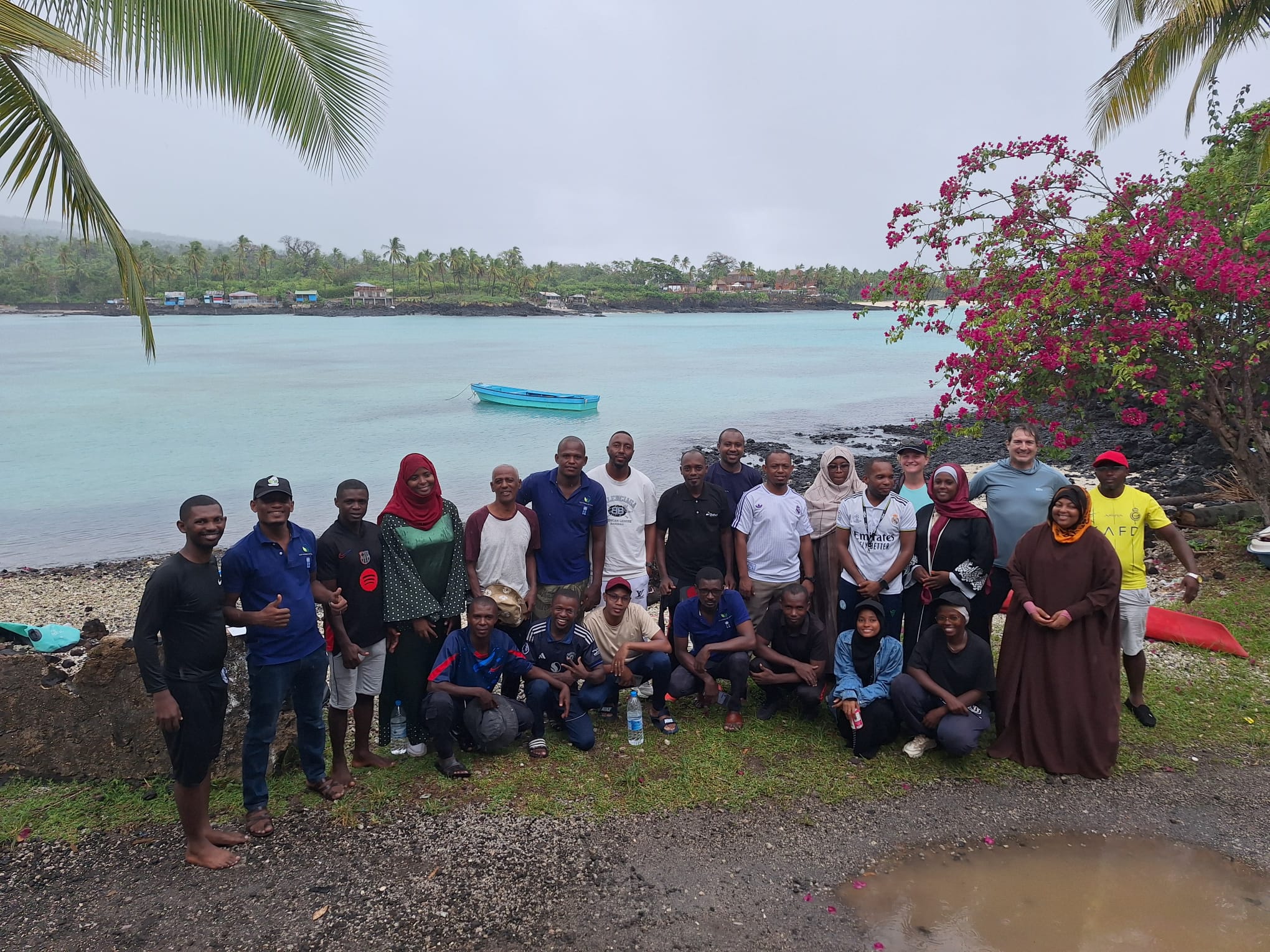
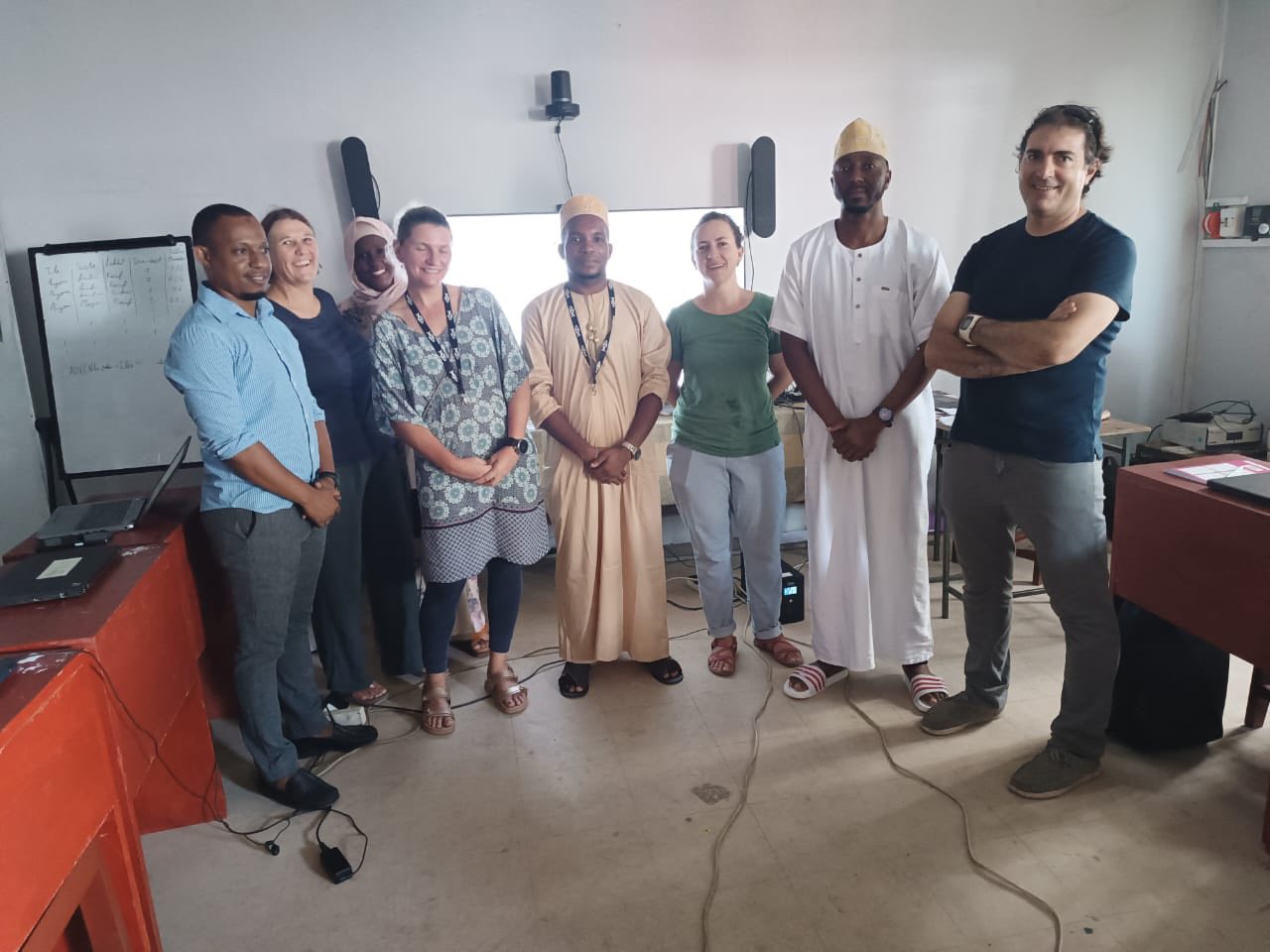
Photos : swipe left to see more photos
More news Events