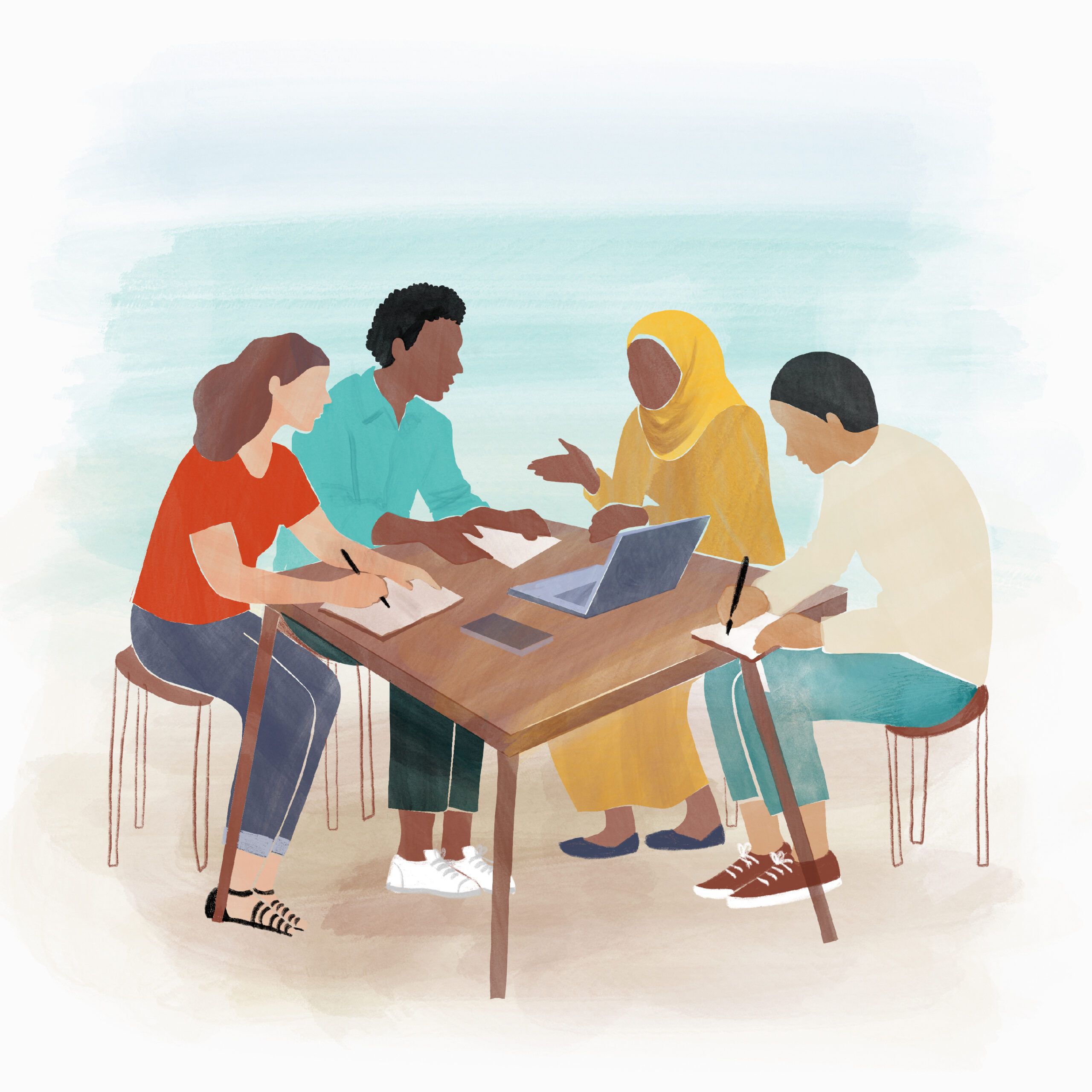
Capacity sharing
BRIDGES supports and funds the capacity sharing and research training of a future generation of researchers and decision-makers in the South-West Indian Ocean with various components:
Doctoral and Postdoctoral Research
BRIDGES offers numerous opportunities for doctoral and postdoctoral research through each of its targeted projects, as well as through calls for thesis clusters.
Calls for thesis clusters aim to expand the community beyond the one identified during the development of BRIDGES. They bring together groups of doctoral students from complementary disciplines to address a chosen theme and/or a shared complex challenge using multiple approaches, methods, and data.
Strengthening and building masters
One of BRIDGES’ goals is to foster the emergence and support the development of academic programs that meet the needs of researchers, marine resource-dependent industries, policymakers, and administrators in the southwestern Indian Ocean. The program promotes a coordinated approach with the universities of Réunion and Mayotte to strengthen and develop master’s programs that encourage multi- and transdisciplinary approaches. This includes:
- Support for the Regional Indian Ocean Master’s program, led by the University of Mayotte, which will begin in 2027 and is co-developed by the University of Réunion and the University of Mayotte, with courses, internships, and fieldwork periods shared between the two territories
- BRIDGES will fund merit-based scholarships (M1 and M2) for SOOI students as well as numerous master’s internships within each of its targeted projects
- BRIDGES funds field schools every two years for students in the BEST-ALI Master’s program at the Faculty of Science and Technology – University of Réunion, and for students in the Bachelor’s program in Life Sciences at the University of Mayotte.
BRIDGES trainings
The program is organising trainings in collaboration with and intended for the researchers involved in BRIDGES and the many regional partners such as parks and reserves, government agencies, professionals, students, and young researchers. The aim for these interdisciplinary events is to jointly design and implement solutions and also to promote science in society.