Launch of BRIDGES Institutional Committees in Mayotte, Réunion, and the Comoros
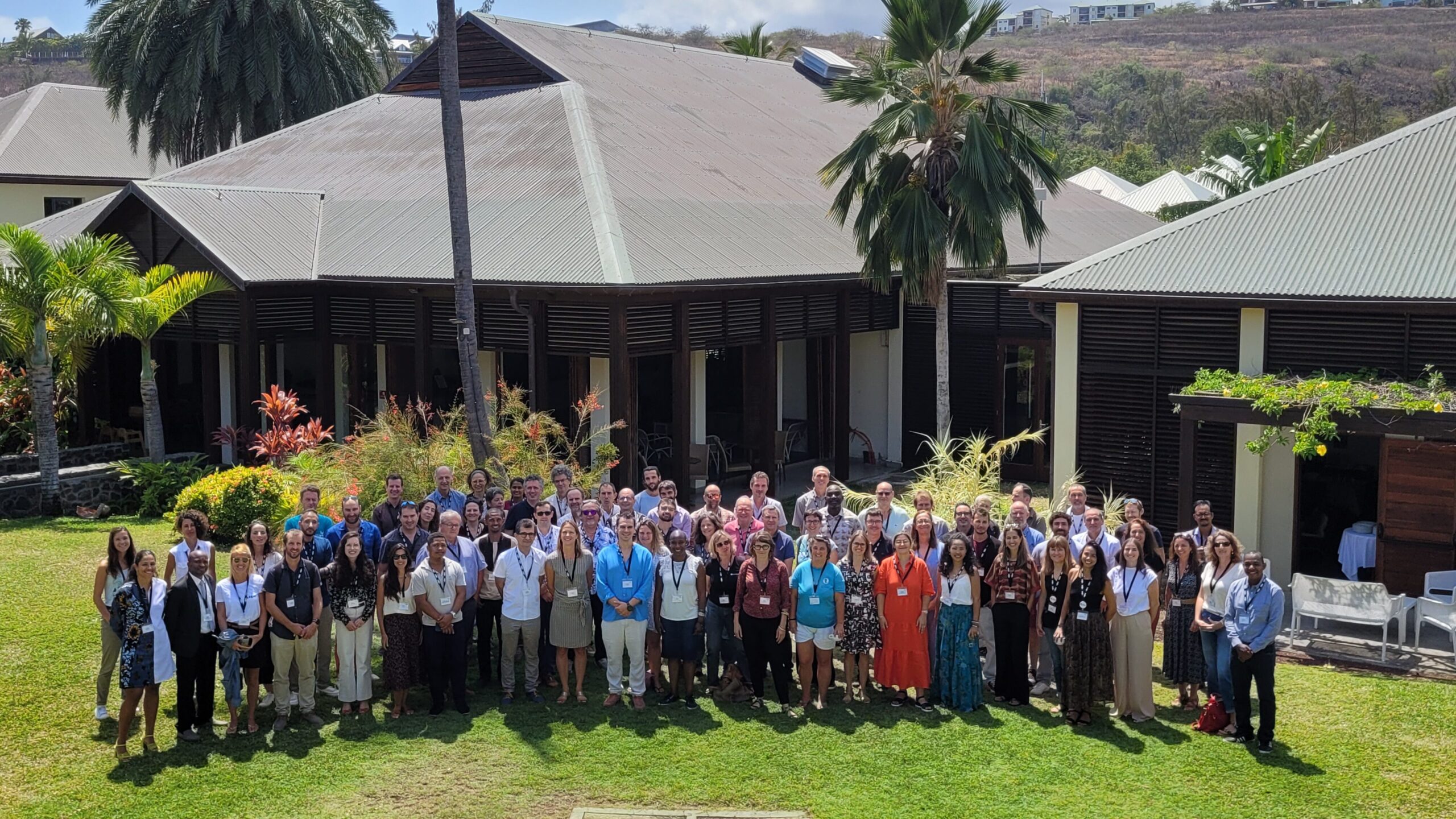
Between November 17 and December 4, 2025, BRIDGES co-directors visited three of BRIDGES’ partner sites to launch the Institutional Committees.
A governance framework established at each site
BRIDGES relies on strategic leadership involving stakeholders at the heart of research and governance at the Program’s study sites. To this end, committees are proposed to facilitate opportunities for discussion and actions rooted in local issues, developed jointly with the various interested parties. The aim is also to promote synergies with existing or future projects.
In 2025 and 2026, the first meetings of these bodies will take place at each partner site.
The role of these committees is as follows:
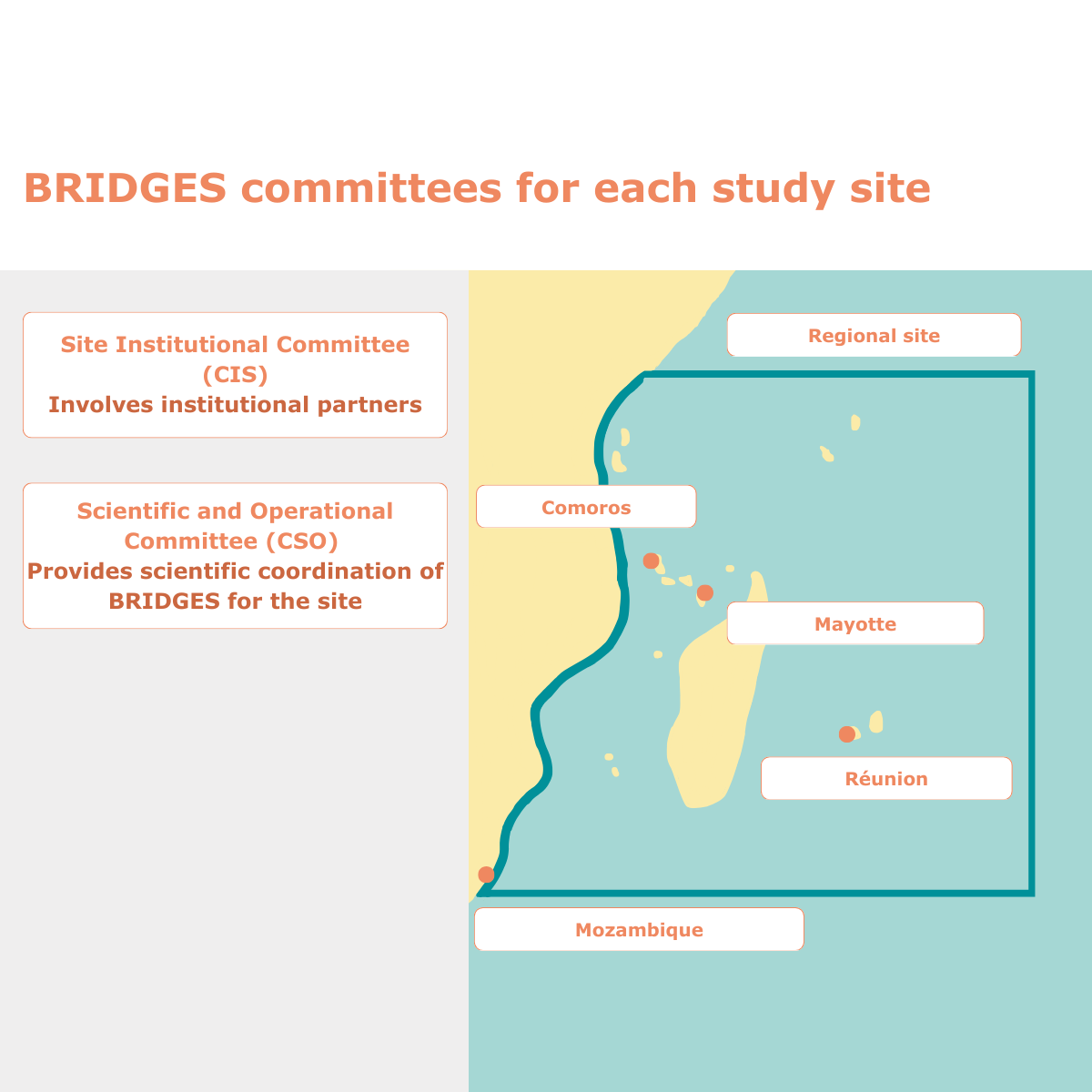
CIS (Institutional Site Committee): involves the institutional partners of each site. This committee provides a forum for discussing BRIDGES activities and ensuring the involvement of partners, effective mutual communication of information, and the consistency of the program with the priorities of the territory. The minimum frequency is once a year.
CSO (Site Scientific and Operational Committee): involves local scientific partners. This committee ensures a strong scientific focus, thanks to the sharing of information and scientific exchanges around the various activities carried out within the Program. The aim is to ensure consistent and integrated deployment with the work carried out by partners on BRIDGES themes.
A look back at the first CIS meeting in Mayotte
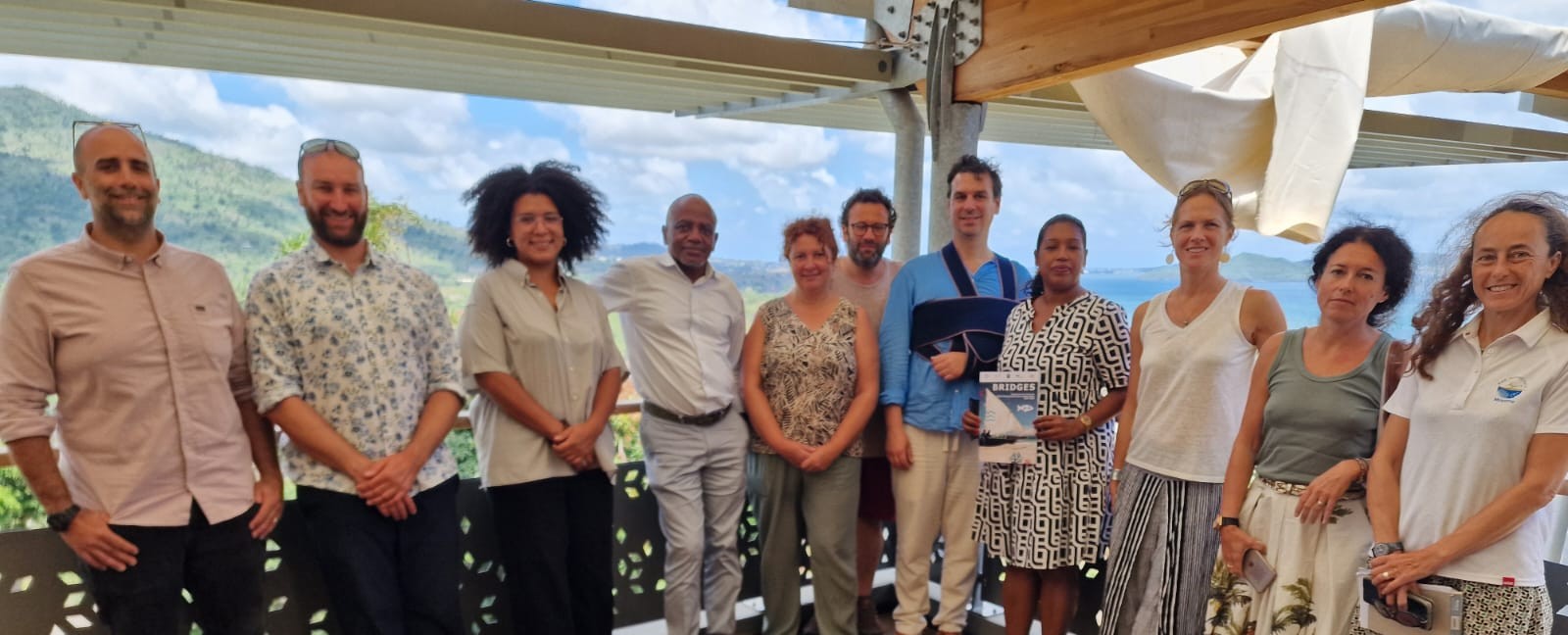
On November 17, 2025, the first CIS meeting in Mayotte was held at the Technopole in Dembéni. Many topics were discussed, including the links to be forged with existing research projects and the major challenges facing the territory, such as the desalination plant project, post-Chido public policies, and the new 15-year management plan for the Mayotte Marine Park, which is being drafted in 2026. BRIDGES reiterated that the working scenarios are not predefined, but will be co-constructed with local stakeholders during the first workshops scheduled for 2026.
Focus on the future Indian Ocean Regional Master’s Degree
With its first intake scheduled for 2027, this master’s degree, supported by BRIDGES and run by the University of Mayotte, offers a socio-ecosystemic approach in which humans are integrated into their ecosystem, with teaching units focused on the challenges facing Mayotte. The aim is to train a generation of young Mahorais who can go on to pursue theses or positions in environmental conservation and management, particularly in Mayotte.
Participants:
In person:
- For the Management Board of the Mayotte Marine Nature Park: Abdou Dahalani, President
- For the Mayotte Marine Nature Park: Annabelle Djeribi, Deputy Director
- For the Mayotte Professional Fishermen’s Maritime Union: Bacoco Lahadji, Vice-President
- For the University of Mayotte: Elliott Sucré, Vice President of Research, and Amélie Van Gemert, Research Promotion Officer
- For the Secretary General for Regional Affairs of the Prefecture of Mayotte: Malalaniriana Randriamahamaly, Project Manager for Economic Development, Employment, and Training, and Chloé Mbutom, Project Manager for Sustainable Development
- For the Mayotte Regional Chamber of Social and Solidarity Economy: Stéphanie Lacaze
- For BRIDGES: Emmanuelle Roque, Director of BRIDGES for Ifremer, Joachim Claudet, Director of BRIDGES for the CNRS, Quentin Schull, leader of BRIDGES RESILIENCE
Online:
- For the Mayotte Regional Education Authority: Fahoullia Mohamadi, Regional Academic Delegate for Research and Innovation
- For the Mayotte Department of Environment, Planning, Housing, and Maritime Affairs: Roxane Hans, Wildlife and Flora Project Manager
- For Ifremer: Eric Abadie, representative for Réunion and Mayotte
- For the French Southern and Antarctic Lands: Ihab Ismail, Head of the Natural Heritage Knowledge and Monitoring Department at the Environment Directorate
- For BRIDGES: Rodolphe Devillers, BRIDGES IMPACT Project Leader, Stéphanie Mahévas, BRIDGES AVATAR Project Leader, Tarik Dahou, BRIDGES CO-CONSTRUCTION Project Leader, Sarah Bareigts, BRIDGES Communications Officer, Sophie Boutin BRIDGES Program Manager.
A look back at the first CIS meeting in Réunion
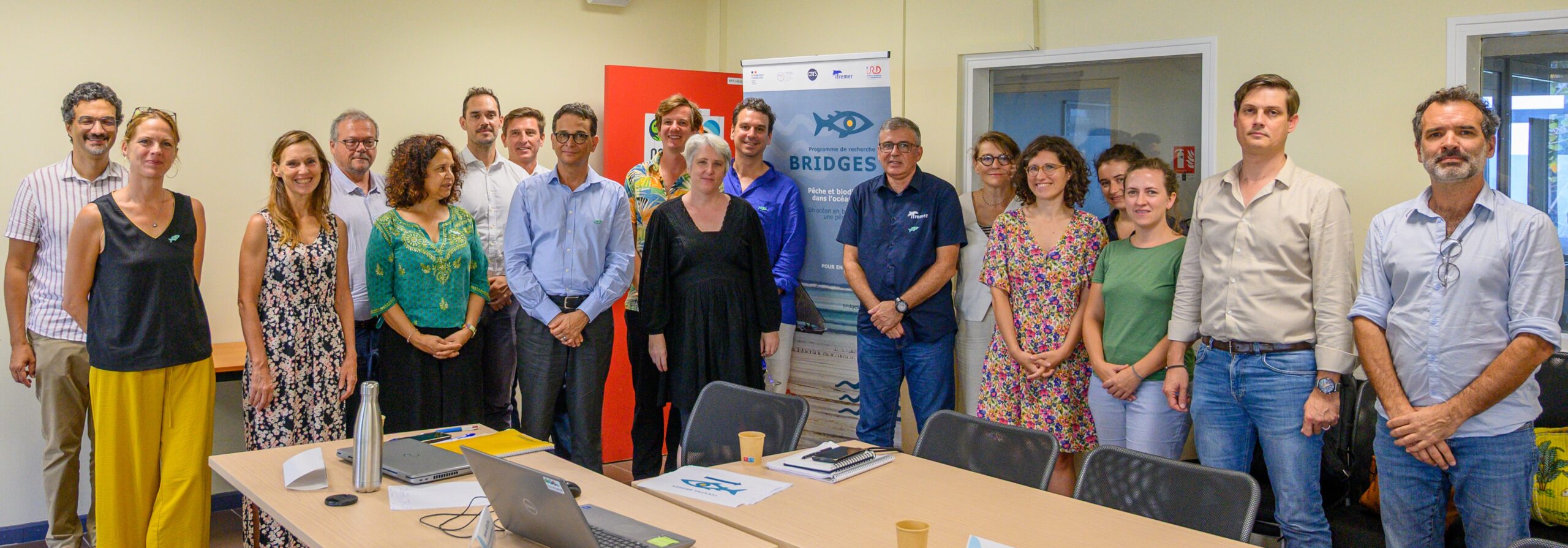
The first CIS meeting in Réunion was held on November 21, 2025, at the premises of the Réunion Observatory of Universe Sciences (OSU-R). Discussions focused on current and future work, with major strategic priorities for the region such as the Indian Ocean Basin Strategy Document (deadline: mid-2027 for adoption by prefects) and the European BlueGreen Governance project.
Focus on public policy:
The issue of the links between research and public policy was central to the discussions. Science is an essential lever for supporting decision-makers and guiding the development of fairer and more effective regulations. With this in mind, BRIDGES is structuring its work around co-construction approaches that will begin in 2026 at each of the partner sites. These workshops, bringing together a variety of stakeholders—including users and managers of marine protected areas—will aim to develop desirable and shared visions for the territory. BRIDGES will then mobilize research to develop scientific tools capable of supporting the governance changes necessary to implement these visions.
Participants:
In person:
- For the French Ministry of Higher Education and Research: Alain Bastide, Regional Academic Delegate for Research and Innovation
- For the French South Indian Ocean Sea Directorate: Laurence Provot, Head of Economic Affairs
- For the General Secretariat for Regional Affairs: Alexandre Trouvilliez, Transition Project Manager, Joëlle Nonet, Digital and Innovation Project Manager
- For the Réunion Region: Jean-Pierre Chabriat, Regional Councilor in charge of research, higher education, and energy transition, Aymeric Girardet, Project Manager
- For the French Southern and Antarctic Lands: Amélie Puccinelli, Secretary General, Audrey Bourdette, Director of Fisheries and Maritime Affairs
- For the Réunion Observatory of Universe Sciences: Fabrice Fontaine, Director
- For the Regional Committee for Maritime Fisheries & Marine Farming: David Guyomard, Scientific Coordinator
- For Ifremer: Eric Abadie, Representative for Réunion and Mayotte
- For IRD: Laurence Tibère, IRD Representative in Réunion and Mayotte
- For CNRS: Jean-Pierre Cammas, Representative in Réunion
- For BRIDGES: Joachim Claudet, BRIDGES Director for the CNRS, Emmanuelle Roque, BRIDGES Director for Ifremer, Adrien Comte, BRIDGES IMPACT Project Leader, Sophie Boutin, BRIDGES Program Manager, Sarah Bareigts, BRIDGES Communications Officer, Julie Furiga, BRIDGES INFORMATION Engineer
Online:
- For the Réunion Region: Maya Césari, Regional Councilor for Innovation and Blue Growth
- For the University of Réunion: Valère Lee-Ching-Ken, Director of Excellence and Outreach
- For the Réunion Marine Nature Reserve Public: Isabelle Jurquet, Director
A look back at the first CIS meeting in the Comoros
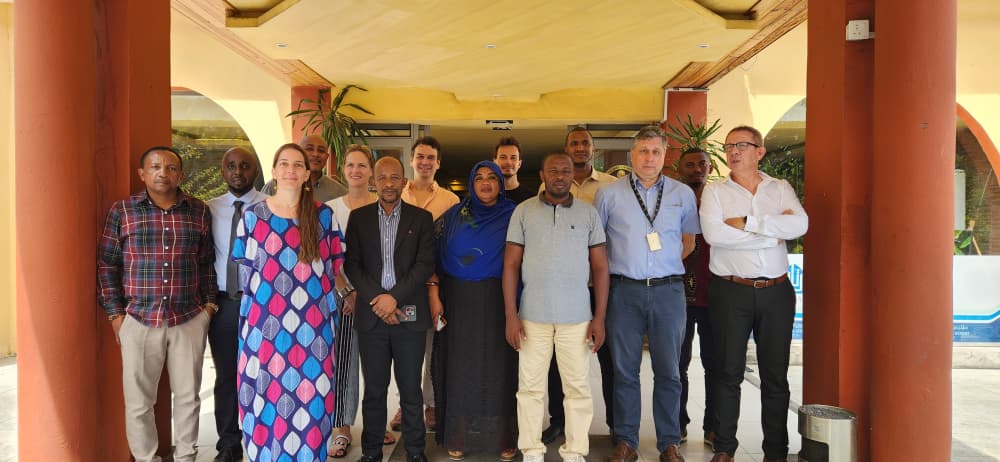
On December 3, 2025, the first CIS meeting in the Comoros took place at the Retaj Hotel in Moroni.
From the outset, participants highlighted the context of coastal biodiversity under pressure, with widespread plastic pollution and significant impacts on small-scale fishing practices. Existing national research and training strategies, as well as work on the establishment of marine protected areas, were placed at the heart of the discussion. BRIDGES is collaborating with the leaders of these guidelines and involving them in various committees and upcoming workshops.
Focus on training:
Through its first call for theses (approximately 9 theses will be selected), BRIDGES wishes to fund topics and students from all of the program’s study sites. The aim is to contribute to research activity at each site. Selected PhD students will receive a thesis grant, a (mandatory) 3-year training program, and a thesis environment.
BRIDGES and the University of the Comoros will also develop training activities through the annual BRIDGES thematic schools and existing master’s programs. These activities will aim to train interested stakeholders, including non-academic stakeholders such as fishermen.
Participants :
In person:
- For the Faculty of Science and Technics (FST), representing the Dean, Dr. Soulé Hamidou Hamada: Dr. Boina Hadji Ahamada Karihila, Lecturer and Researcher
- For the Marine and Coastal Sciences Laboratory: Dr. Nadjim Ahmed Mohamed, Lecturer and Researcher
- For the National Institute for Agricultural, Fisheries and Environmental Research (INRAPE): Dr. Abdou Azali Hamza, Director, Mr. Moustarchide Ben Soudjay, Head of the Fisheries Research Department
- For the Directorate General of Fisheries Resources (DGRH): Mr. Soifa Ahamed
- For the Ndzuani Regional Fisheries Directorate: Mr. Affane Nounou Amil, Regional Director of Fisheries
- For the Ngazidja Chamber of Agriculture, Fisheries, and Livestock: Ms. Fatoumia Ahamada, Vice President, Mr. Chakourou Mmadi, Fishermen’s Representative
- For the Ngazidja Fishermen’s Union: Mr. Ouledi Chanfi, President
- For the Mitsamiouli-Ndroudé National Park: Mr. Nassuf Humblot, Curator
- For the NGO DAHARI: Ms. Effy Vessaz, Director of Marine Strategy
- For the NGO CORDIOEA: Mr. Joshua Rambahiniarison, Researcher
- For the French Embassy in the Comoros: Mr. Ludovic Khamchane, Scientific and Academic Cooperation Attaché
- For IRD: Dr. Thierry Portafaix, IRD Representative in Madagascar, Mauritius, Comoros, and Seychelles
- For BRIDGES: Emmanuelle Roque, BRIDGES Director for Ifremer, Joachim Claudet, BRIDGES Director for CNRS
Online :
- For the Regional Directorate for Environment and Forests of Ndzuani (DREF): Mr. Mohamed Gou Zakaria
- For BRIDGES: Sarah Bareigts and Sophie Boutin
More news News