First Meeting of the Scientific and Operational Committee of La Réunion and Public Scientific Seminar
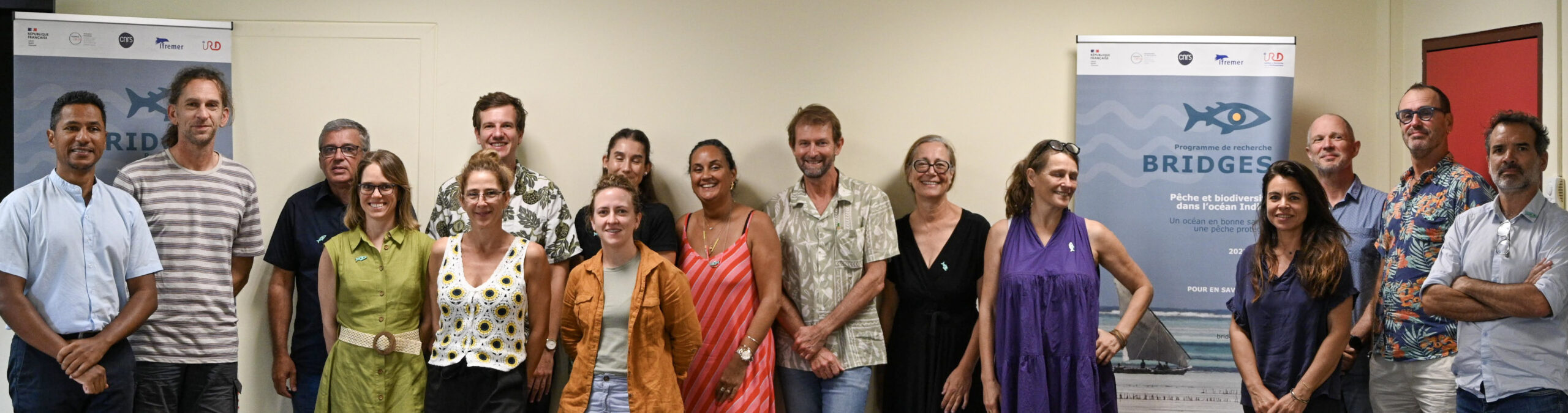
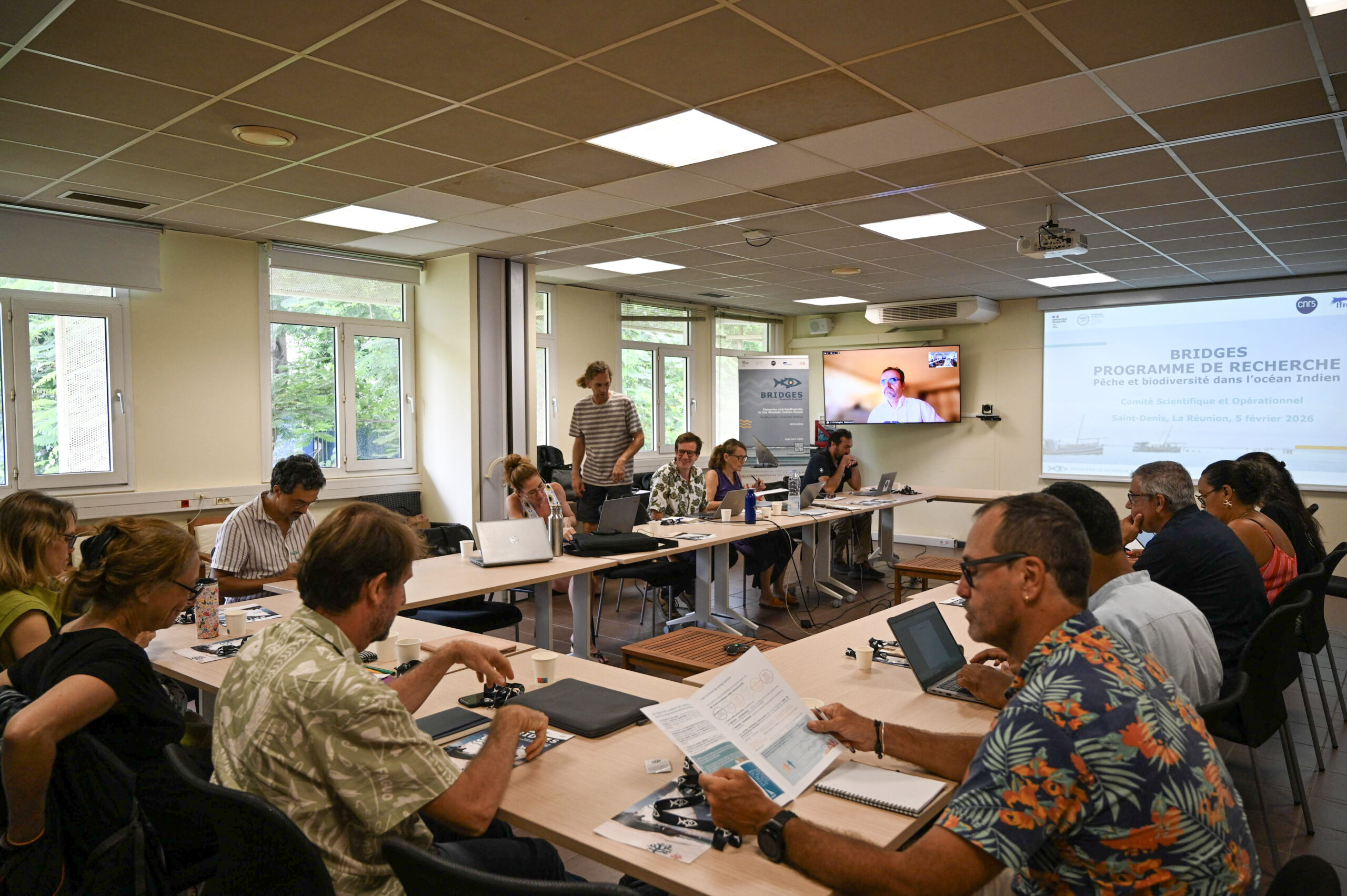
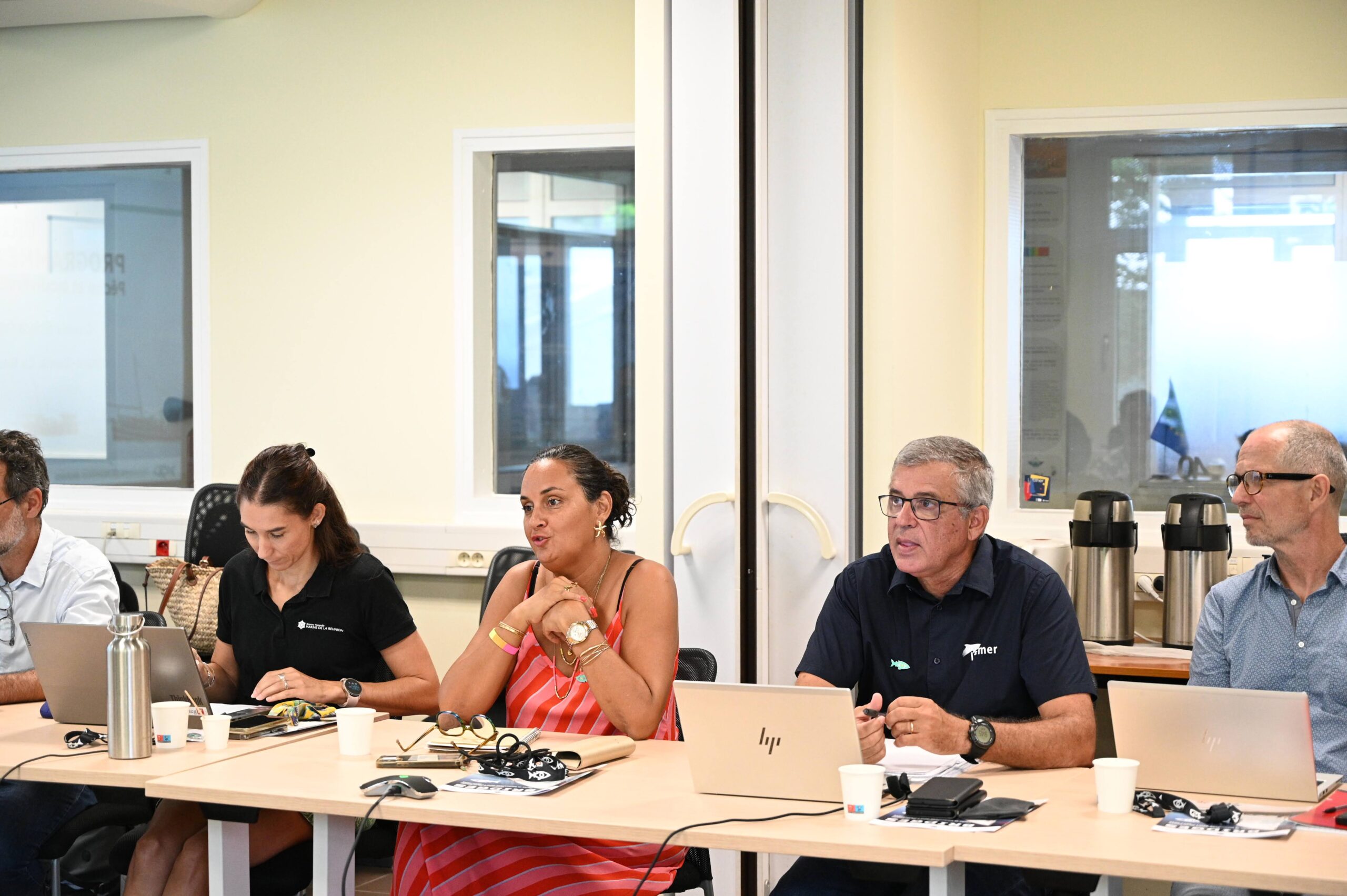
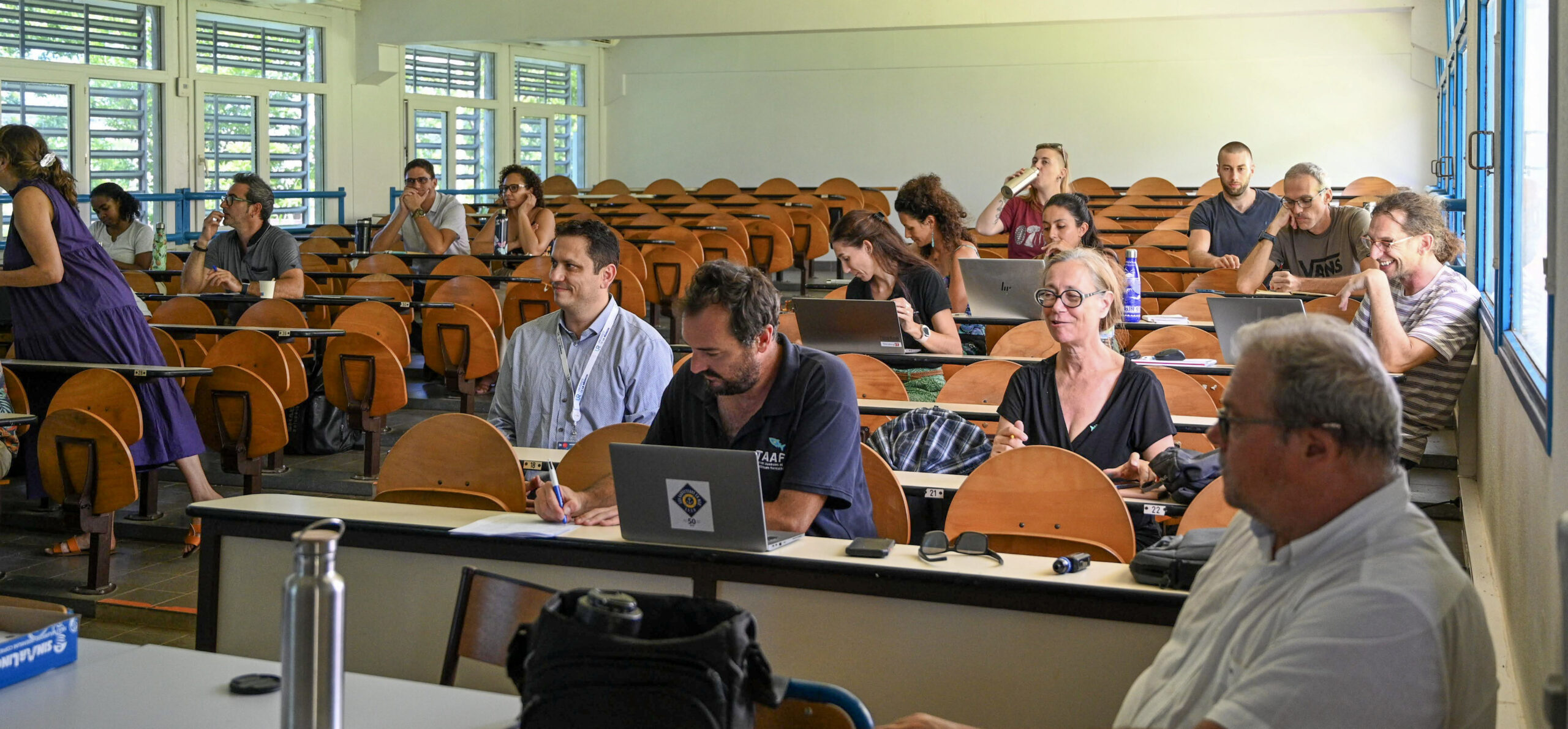
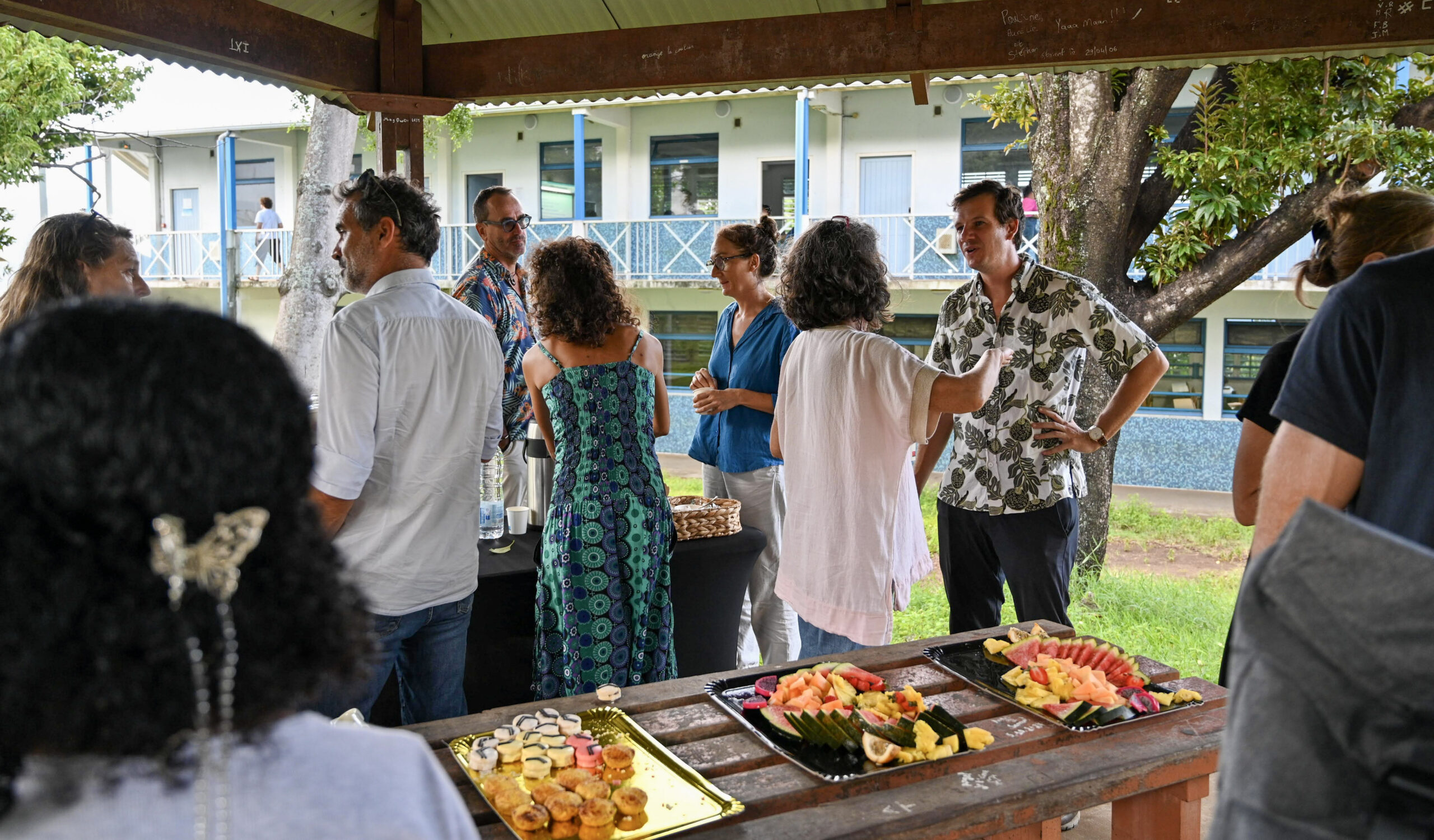
On Thursday, February 5, 2026, the first meeting of the Scientific and Operational Committee (CSO) of La Réunion was held at the University of La Réunion. This gathering brought together scientific stakeholders from various institutions on the island, highlighting the importance of addressing partner expectations and needs, sharing collaboration opportunities, and fostering interactions among the different actors. In the afternoon, a public scientific seminar extended the discussions, broadening the conversation to a wider audience.
A Framework for Scientific Engagement and Collaboration
The CSO (Site Scientific and Operational Committee) of La Réunion involves local scientific partners. It ensures sustained scientific engagement through information sharing and exchanges about activities conducted under BRIDGES. The goal is to guarantee a coherent and integrated deployment aligned with the work of partners on the program’s themes.
Key Discussions: Priorities and Perspectives
Several themes structured the discussions, revealing both significant progress and future avenues for work:
- Monitoring Pollutants and Pressures on the Lagoon: The exchanges emphasized the need to strengthen the study of contaminants and their impacts on lagoon ecosystems. Several initiatives aim to better understand pollution sources (such as agricultural inputs) and their effects on the health of reefs and fish.
- Protection and Restoration of Coral Reefs: Ongoing studies analyze the causes of reef degradation and propose tailored protection measures.
- Improving Fishing Activity Monitoring: Special attention is being paid to recreational fishing, whose impact remains poorly assessed. The challenge is to better document these practices for more comprehensive marine resource management.
- Optimizing Observatories and Data Sharing: BRIDGES is working to strengthen existing systems by facilitating data access and promoting best practices. The focus is on sustaining monitoring systems and adopting a collaborative approach for more effective management of marine socio-ecosystems.
These discussions were followed by a public scientific seminar, which expanded the reflection and shared the program’s progress with a broader audience.
Participants :
In Person:
- CNRS: Jean-Pierre Cammas, Representative in La Réunion
- Ifremer DOI: Eric Abadie, Representative for La Réunion and Mayotte
- OSU-R: Fabrice Fontaine, Director
- MNHN: Nathalie Becker, Representative in La Réunion
- CEDTM: Katia Ballorain, Scientific Manager
- Centre Sécurité Requin: Emmanuel Coutures, Scientific Expertise Coordinator
- CEMOI: Sabine Garabédian, Lecturer
- CRPMEM: David Guyomard, Scientific Coordinator
- TAAF: Clément Lelabousse, Mission Officer for Coral Reefs and Associated Ecosystems of the Îles Éparses
- Météo-France: Marie-Dominique Leroux, Head of Studies and Climatology Division
- DMSOI: Robert Mauve, Deputy Director – Sustainable Maritime Development Service
- Reunion’s Regional Agency for Biodiversity: Karine Pothin, Director
- Reunion Natural Marine Reserve: Anne-Laure Techer-Clement, Head of Uses and Activities
- CITEB: Jean Turquet, Technical Manager
- BRIDGES:
- Adrien Comte (BRIDGES Focal Point for La Réunion, IRD)
- Emmanuel Tessier (BRIDGES RESILIENCE, Ifremer)
- François Chauvet (BRIDGES OBSERVATION, CNRS)
- Julie Furiga (BRIDGES INFORMATION, CNRS)
- Sophie Boutin (Program Manager)
- Sarah Bareigts (Communication Officer)
Online:
- Région Réunion: Kévin Lamy, Project Officer for Natural Risks and Climate Change
- MAREX: Mathieu Pinault, Co-founder
- BRIDGES:
- Christophe Delacourt (BRIDGES Focal Point for La Réunion, UBO-CNRS)
- Héloïse Muller (BRIDGES AVATAR, Ifremer)
Public Scientific Seminar
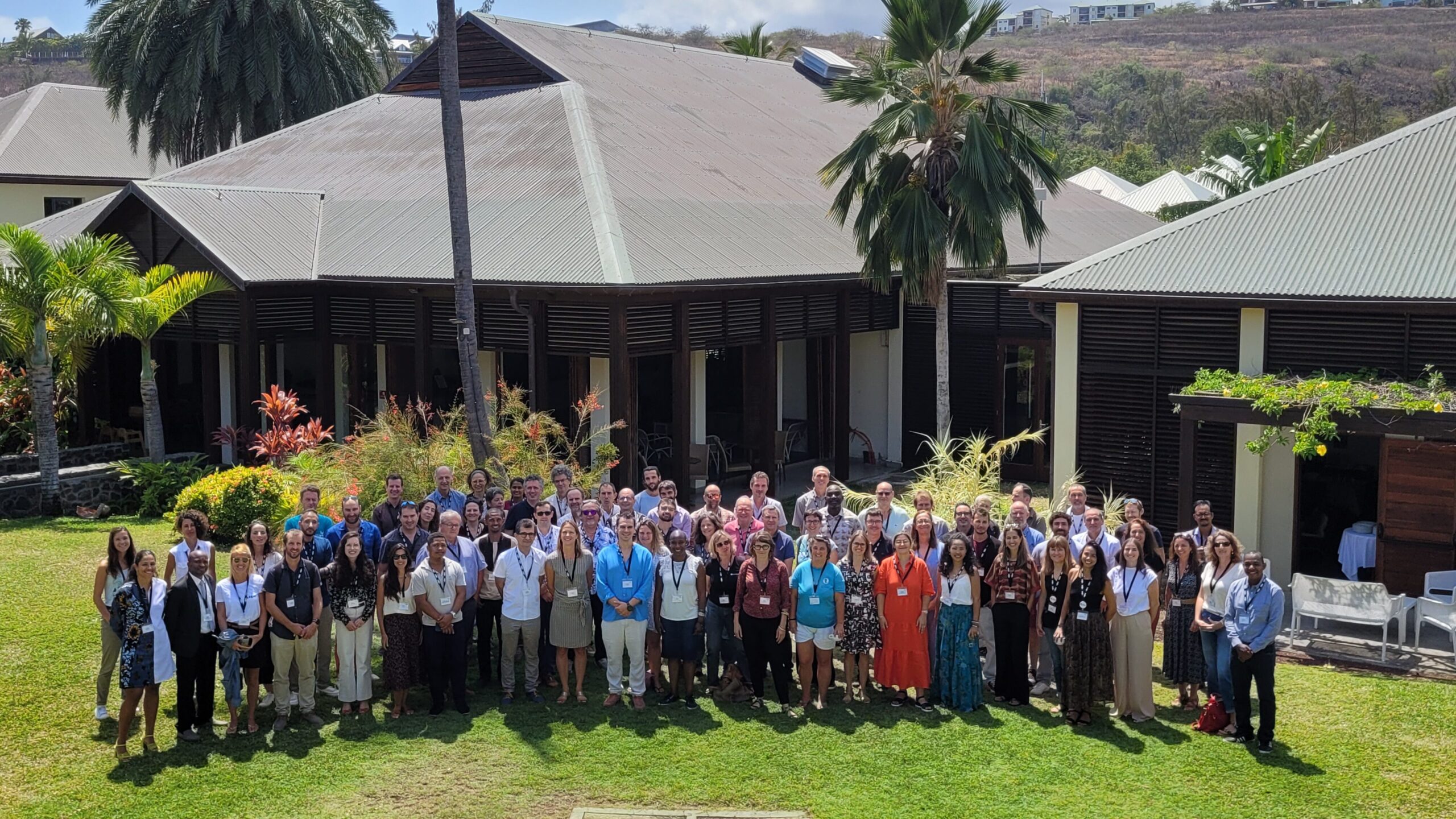
In the afternoon, the public scientific seminar gathered 43 participants at the University of La Réunion. It featured presentations followed by Q&A sessions with the audience.
Developing an Interdisciplinary Digital Environment
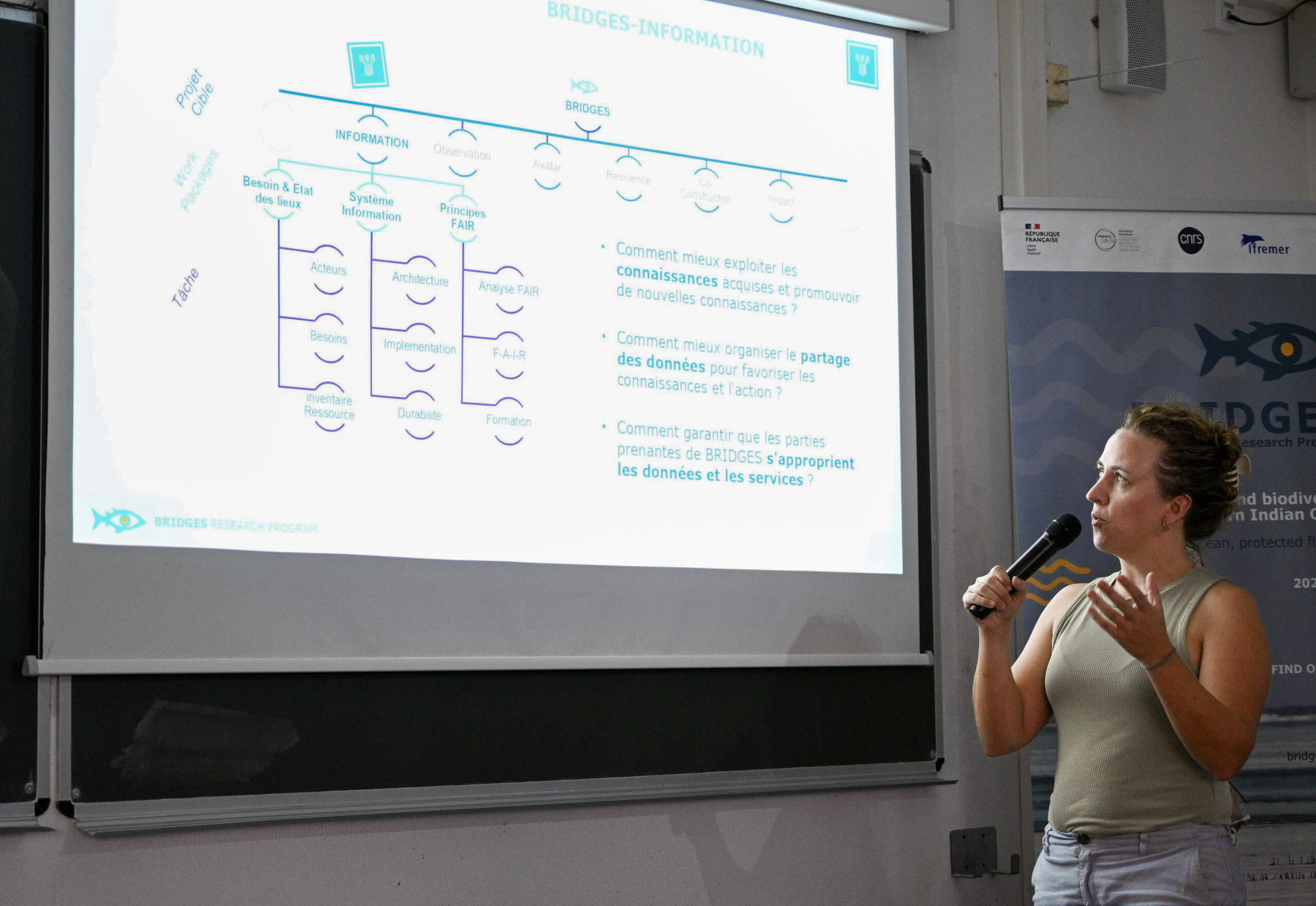
Julie Furiga (CNRS) and Nicolas Coquillas (University of La Réunion), members of the BRIDGES-INFORMATION project, presented their work on mapping stakeholders involved in the management of marine and coastal socio-ecosystems in the Southwest Indian Ocean. They also shared the results of the resource inventory and data needs assessment conducted in 2025, as well as the progress of the program’s information system.
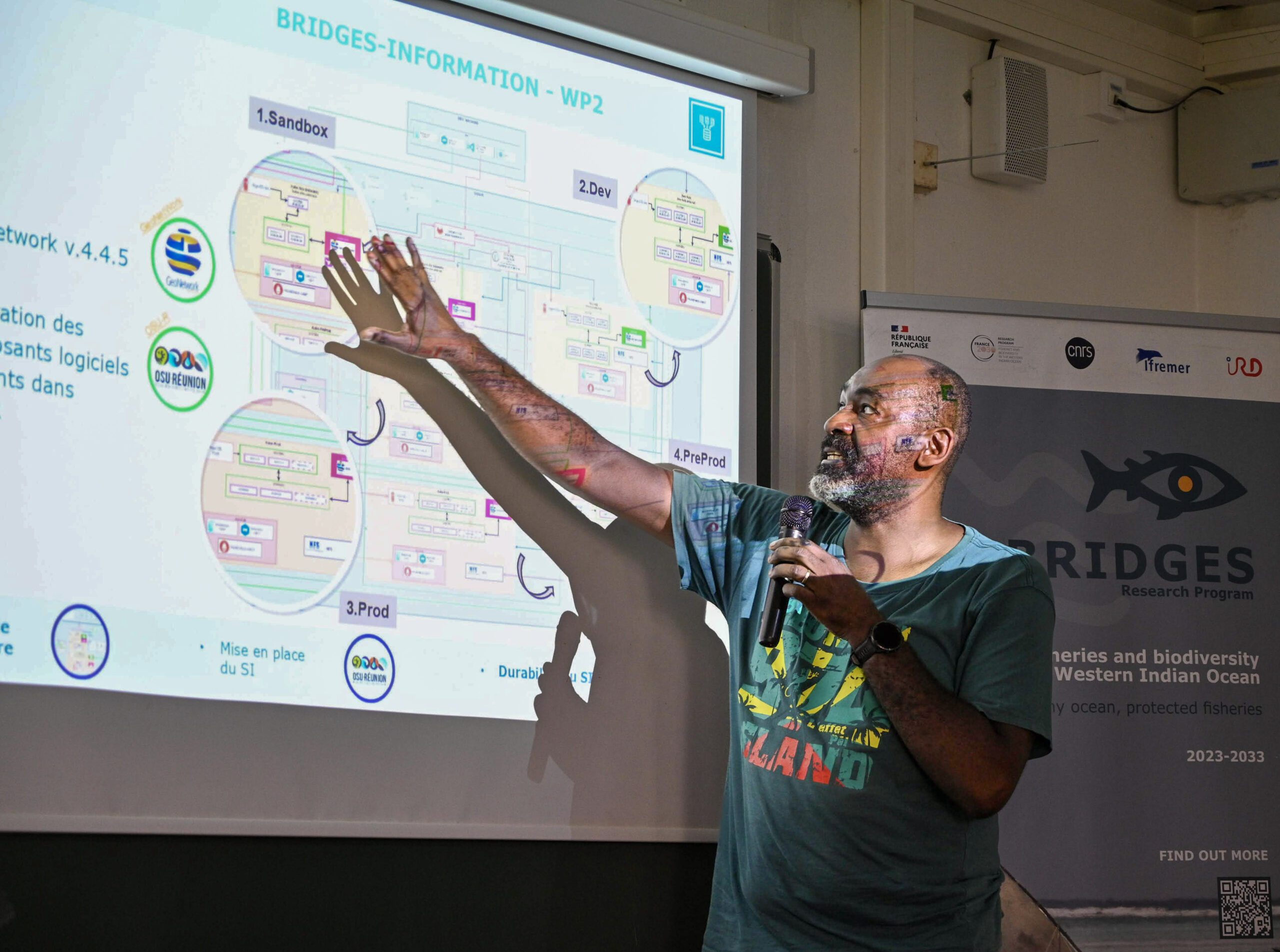
Key Points:
- Launch of BRIDGES x DATA TERRA schools (2025–2026) to train local stakeholders in data management and utilization.
- 49 metadata sheets will soon be available, facilitating data access for researchers and managers.
- A FAIR (Findable, Accessible, Interoperable, Reusable) analysis of the submitted sheets to ensure their quality and utility.
Toward an Innovative Observatory for Marine Socio-Ecosystems
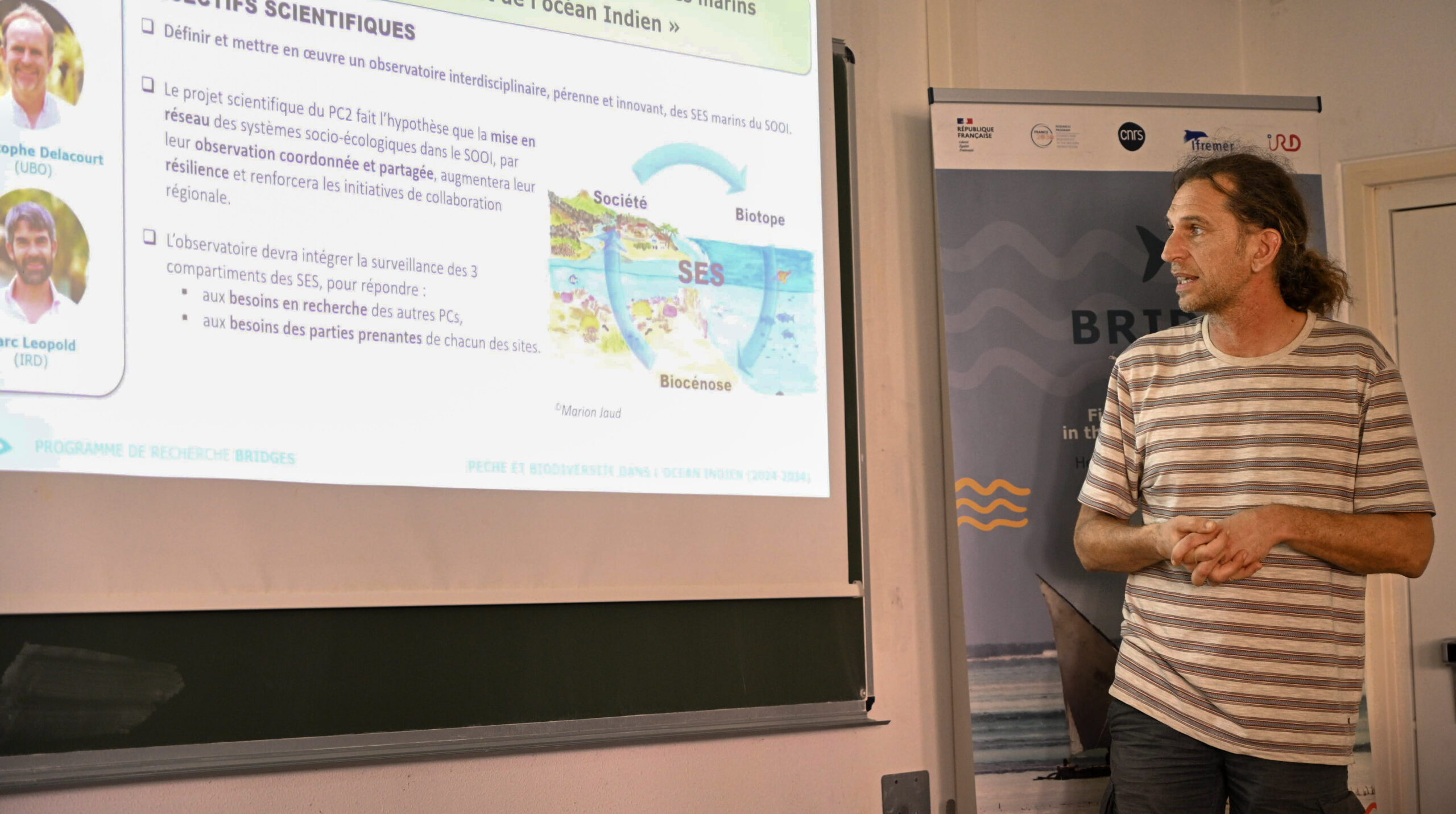
François Chauvet (University of Brest, BRIDGES-OBSERVATION) presented ongoing efforts to define and implement an innovative observatory in the Southwest Indian Ocean. He highlighted:
- A workshop scheduled for September 2026 in La Réunion, bringing together regional partners to define a minimum common observation framework.
- A critical inventory of existing observatories, continued during his mission in La Réunion from February 2–6, 2026.
Characterizing Transformations in Marine Socio-Ecosystems
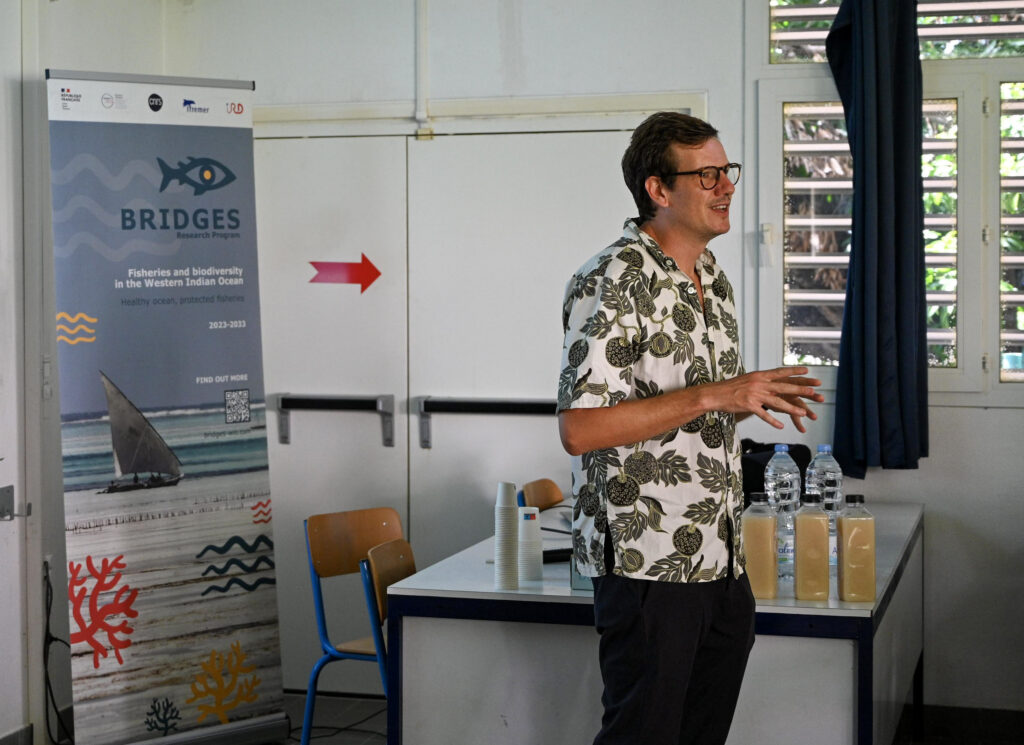
Adrien Comte (IRD, co-lead of BRIDGES-IMPACT and focal point for La Réunion) presented an upcoming publication, co-authored with Rachel Bitoun, based on three case studies developed during IMCC7 (October 2024).
Objectives:
- Provide insights into what transformative science is, a core approach in the program’s philosophy.
- Guide the measurement of transformation and assess BRIDGES’ impact on study sites.
Recreational and Informal Fishing: What Challenges for the La Réunion Marine Nature Reserve?
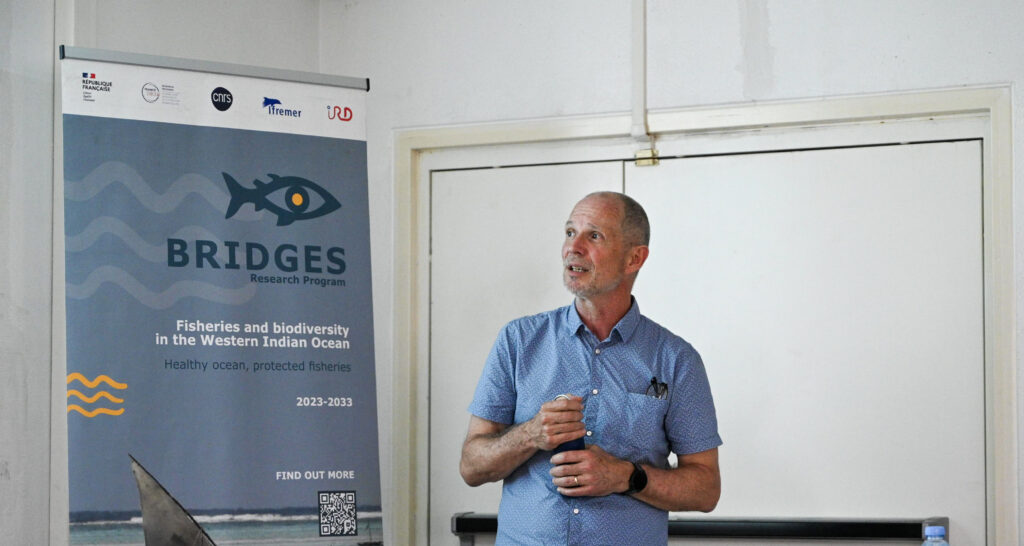
Emmanuel Tessier (Ifremer, BRIDGES-RESILIENCE) concluded the presentations by addressing a often overlooked but crucial topic: recreational and informal fishing. He highlighted:
- The need to better integrate these practices into conservation strategies.
- The lack of data on this segment of Réunionese fishing, whose catch volume could reach around 40% of the total.
- The management challenges for the La Réunion Marine Nature Reserve.
For more information on BRIDGES’ work in La Réunion, please contact: adrien.comte@ird.fr.
Governance Embedded in Each Site
BRIDGES relies on strategic governance involving stakeholders at the heart of research and site management. To this end, bodies are proposed to develop exchange opportunities, actions rooted in territorial issues, and co-constructed with the various stakeholders. The goal is also to foster synergies with existing or future projects.
In 2025 and 2026, the first meetings of these bodies are taking place at each partner site.
Role of the Committees:
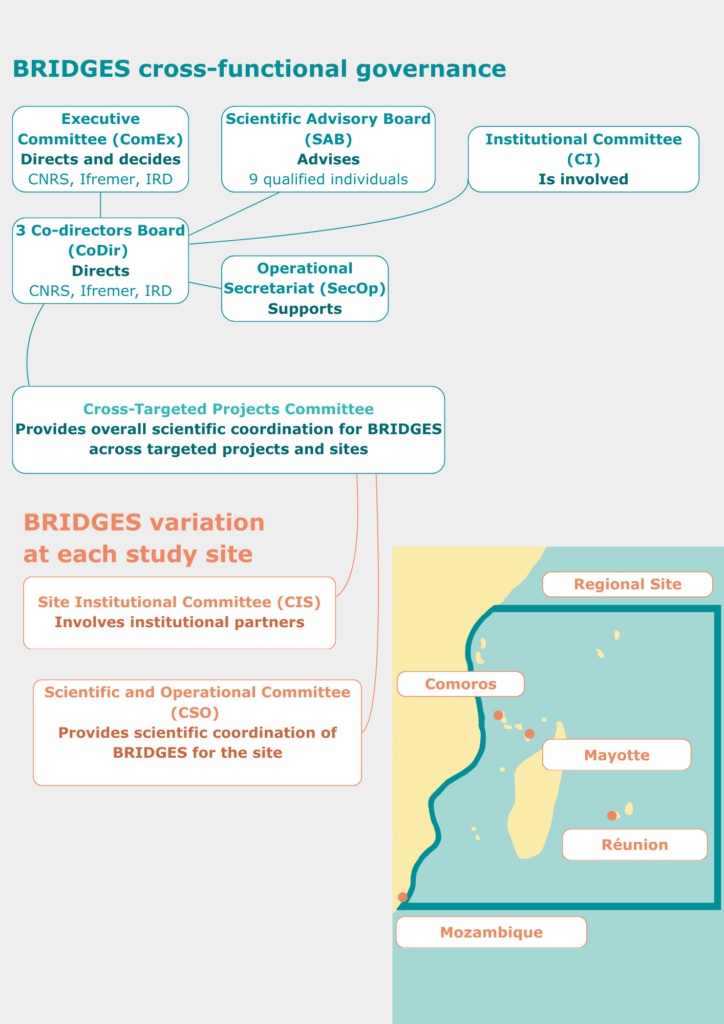
CIS (Site Institutional Committee): Involves institutional partners from each site. This committee discusses BRIDGES activities and ensures partner involvement, reciprocal information sharing, and program coherence with territorial priorities. The minimum frequency is annual.
CSO (Site Scientific and Operational Committee): Involves local scientific partners. This committee ensures sustained scientific engagement through information sharing and scientific exchanges about the program’s activities. The goal is to ensure a coherent and integrated deployment aligned with the work of partners on BRIDGES themes.
More news Events