Scattered Islands: two scientific missions to better understand marine biodiversity and connectivity
Between August and November 2026, two PhD students from the first BRIDGES PhD cluster are taking part in scientific missions to the Scattered Islands. From environmental DNA analysis to tracking the movements of fish and sea turtles, their research will help improve our understanding of the connections between ecosystems in the southwest Indian Ocean and inform conservation strategies.
Océane Desbonnes: a month at sea exploring environmental DNA and conservation challenges
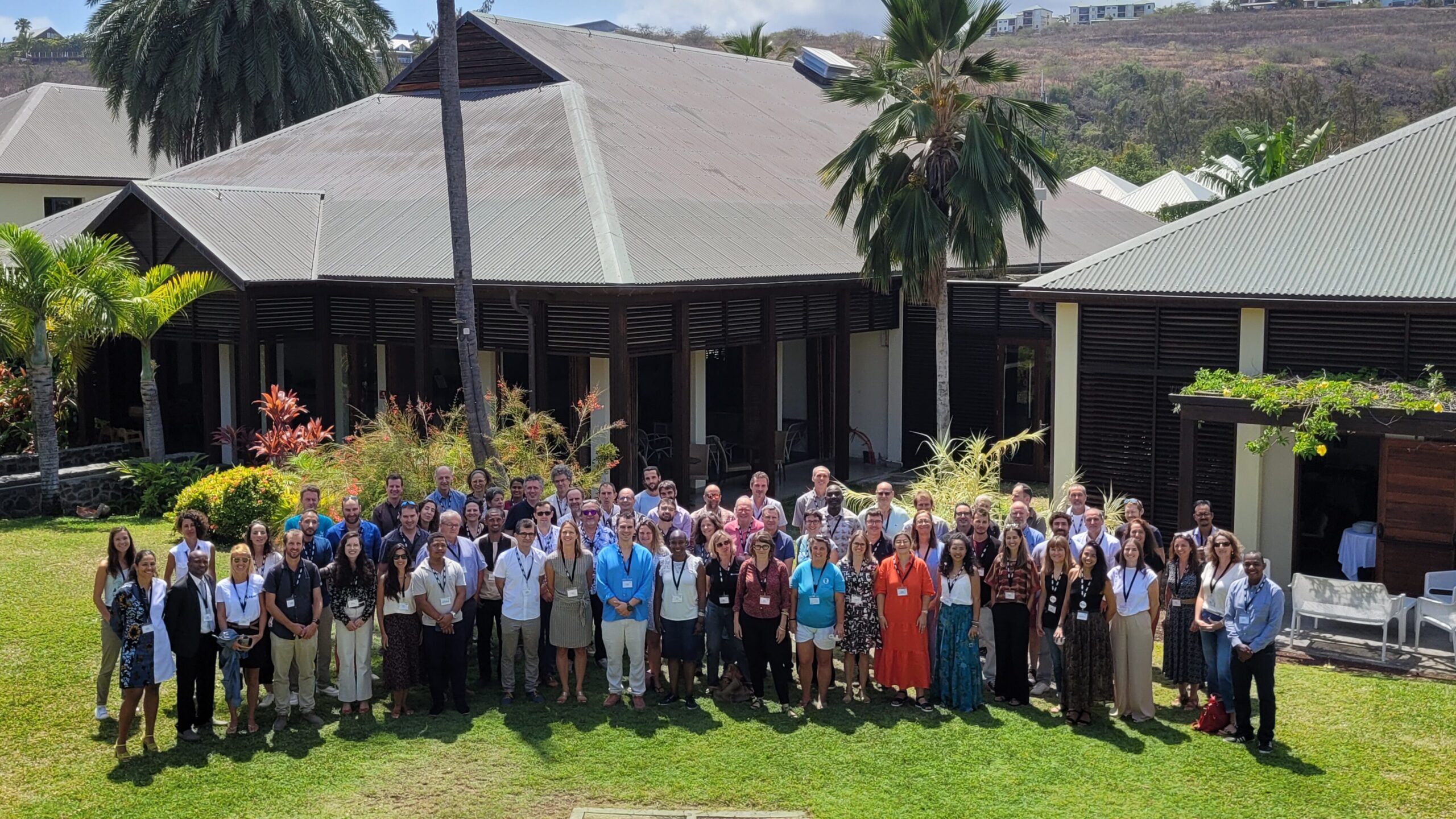
From 8 August to 8 September 2026, Océane Desbonnes sailed aboard the Osiris II, a maritime affairs patrol vessel, representing both the Agence de Recherche pour la Biodiversité à La Réunion (ARBRE) and BRIDGES, a few weeks before starting her PhD.
The expedition was part of the MARIO project, led by the French Southern and Antarctic Lands (TAAF), with support from the French Development Agency and the European Union. Its aim is to improve knowledge and monitoring of the marine ecosystems of the Scattered Islands, particularly the poorly documented habitats and ecological roles of their seamounts and outer slopes, to inform their protection and management. Several scientific protocols were implemented, including measurements of water temperature and conductivity to help monitor the effects of climate change on marine environments and coral reefs.
Identifying species through the traces they leave in the water
A trained marine biologist and secretary of the ARBRE association for the past four years, Océane contributes to its marine biodiversity projects, particularly through the use of environmental DNA, or eDNA.
This method involves collecting fragments of DNA that organisms release into their environment, for example through mucus, waste or shed cells. Collected in water samples, these fragments are then analysed in the laboratory using metabarcoding to identify the species present. This non-invasive approach makes it possible to document biodiversity without capturing animals.
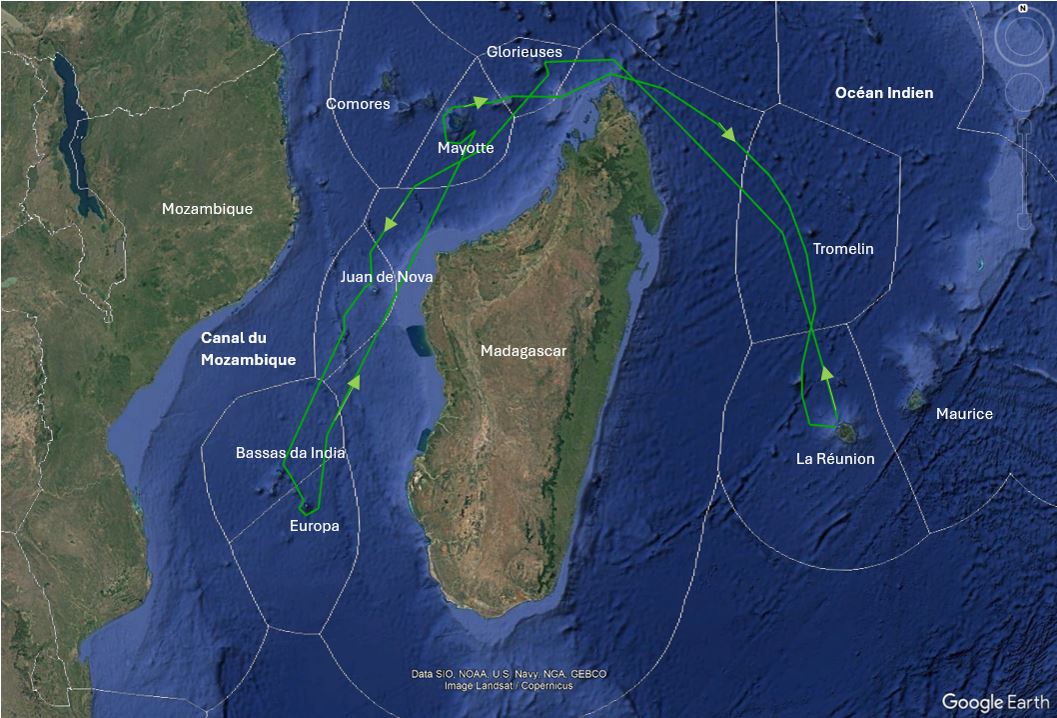
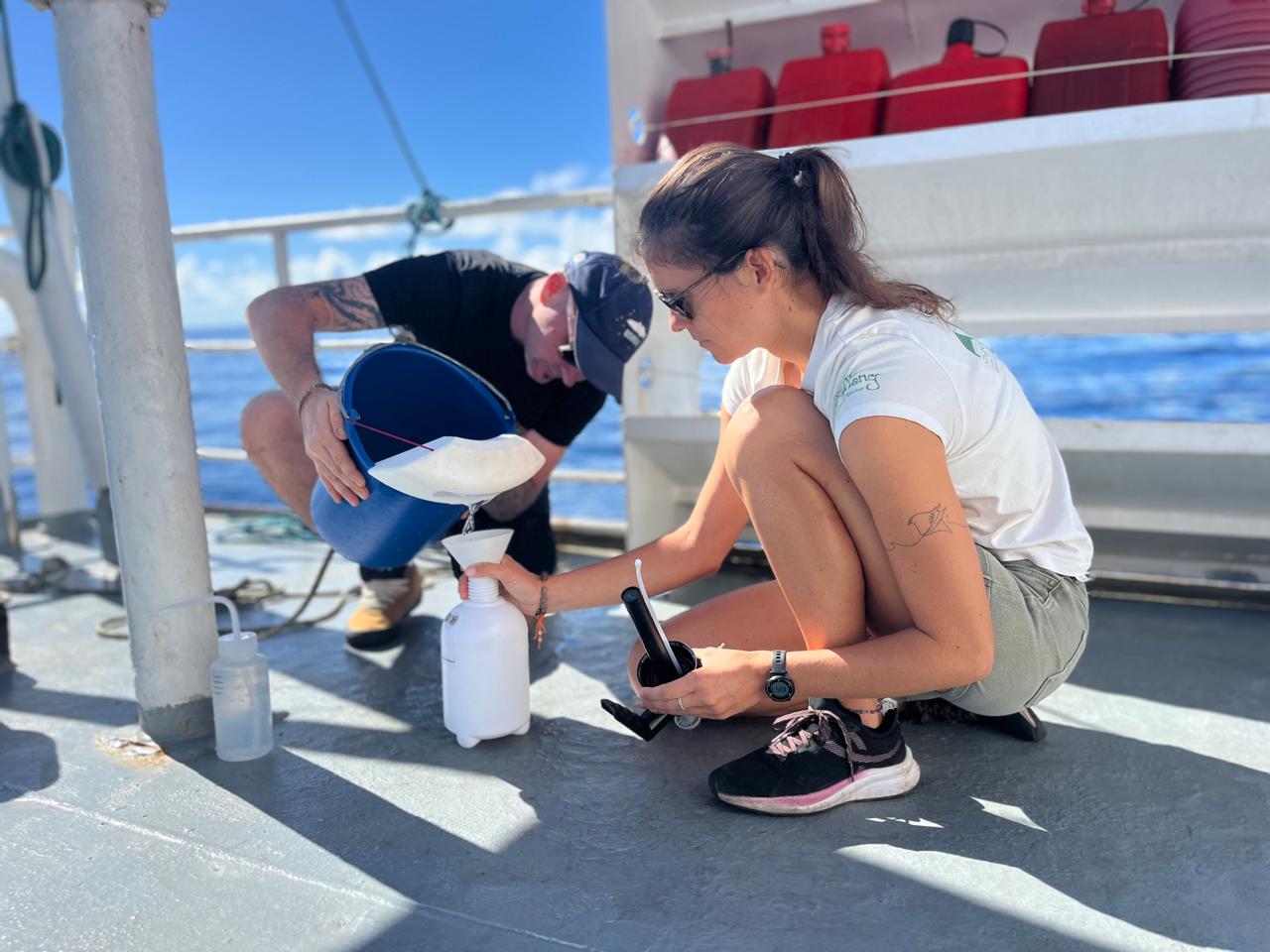
Aboard the Osiris II, Océane collected 12 seawater samples along the outer slopes of Juan de Nova, Bassas da India and Europa, as well as along the Sakalave seamount chain. These samples will be compared with those she previously collected along the Southwest Indian Ridge, contributing to research on the ecological connections between these ecosystems.
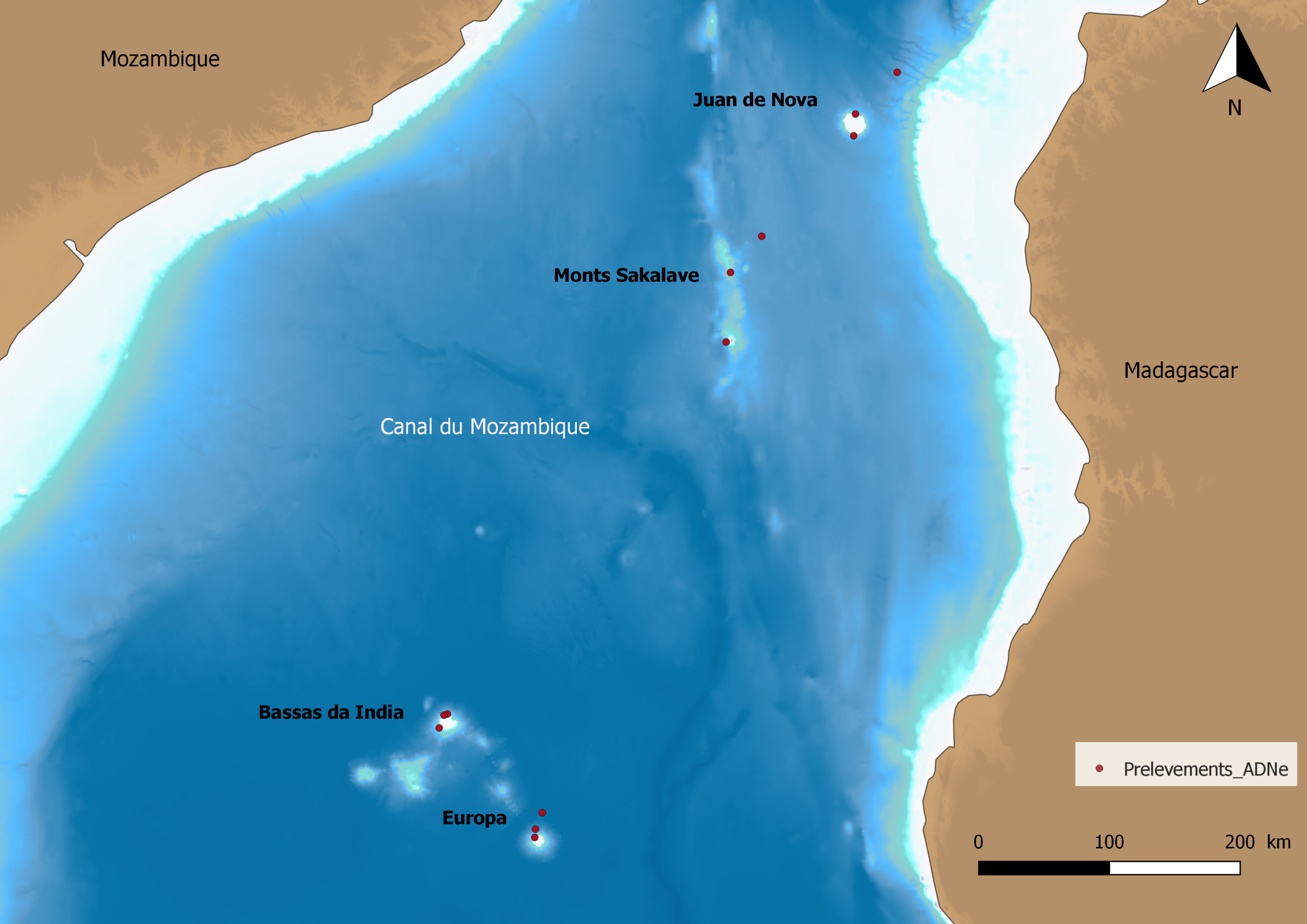
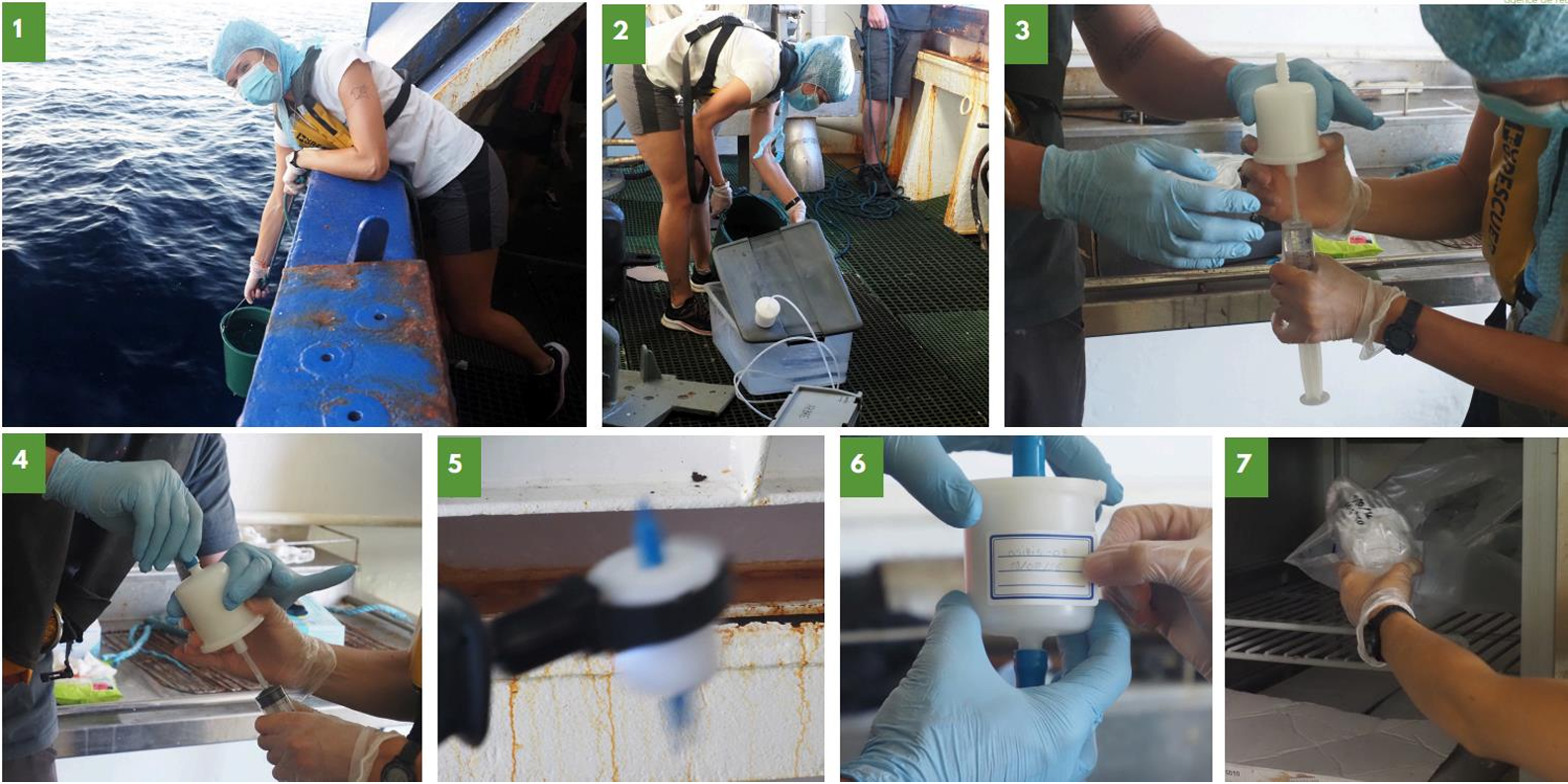
Figure 3: eDNA sampling protocol aboard the OSIRIS II. 1) Collecting 50 L of seawater. 2) Using a pump to pass the seawater through a filter cartridge to capture eDNA (the filtered water is then discharged). 3) Retrieving the cartridge and adding the eDNA preservation solution. 4) Sealing the cartridge to prevent contamination with human DNA. 5) Shaking the cartridge to suspend the eDNA in the preservation solution. 6) Labelling the cartridge with the sample number and date. 7) Storing the cartridge at −20°C for optimal eDNA preservation.
A first field experience to prepare for her BRIDGES PhD
This mission also provided Océane with an initial field experience ahead of her SWIOMPA PhD, which she began in October 2026 at the Institute of Environmental Geosciences (IGE), under the supervision of Pierre Brasseur (CNRS, IGE), Ignacio Palomo (IRD, IGE) and Hugo Deléglise (IGE).
Funded through the first BRIDGES doctoral research cluster, her SWIOMPA PhD focuses on integrated planning for marine protected areas in the southwest Indian Ocean. It aims to reconcile biodiversity conservation with the maintenance of ecosystem services, particularly those supporting small-scale fisheries.
The expedition enabled her to begin discussions with stakeholders she will work with during her PhD, including the French Southern and Antarctic Lands (TAAF) and the South Indian Ocean Directorate for Maritime Affairs (DMSOI). Co-design workshops will bring together institutions, scientists, fishers and local communities to identify and incorporate local needs and constraints into marine protected area planning. She also became familiar with biodiversity, fisheries and management issues in the region’s marine protected areas, particularly around Mayotte and the Scattered Islands. These experiences will inform her research within the BRIDGES regional study site.
Océane thanks ARBRE, DMSOI, the crew and the scientific teams aboard the vessel for their support throughout the mission.
Juliette Debarge: tracking fish and sea turtle movements around Europa
From 1 to 14 November 2026, Juliette Debarge is taking part in a mission to Europa, in the French Southern and Antarctic Lands, to establish a system for tracking the movements of several marine species.
This first mission is part of her ACCRO PhD (supervised by Jérôme Bourjea (MARBEC, Ifremer), Taryn Murray (SAIAB), Tarek Hattab (MARBEC, Ifremer), funded through the first BRIDGES doctoral research cluster. Her research uses acoustic telemetry to better understand connectivity in sea turtles and fish and inform their transboundary management. Her study area covers the maritime border between Mozambique and South Africa, Europa in the Scattered Islands, and the Comoros.
A listening network to monitor movements over time
The mission will deploy 20 hydrophones, which will remain operational for at least three years. These underwater receivers will detect signals emitted by acoustic tags fitted to animals whenever they pass within range.
The tagging programme will target:
- 80 fish from four coastal pelagic species: giant trevally (Caranx ignobilis), bluefin trevally (Caranx melampygus), narrow-barred Spanish mackerel (Scomberomorus commerson) and wahoo (Acanthocybium solandri);
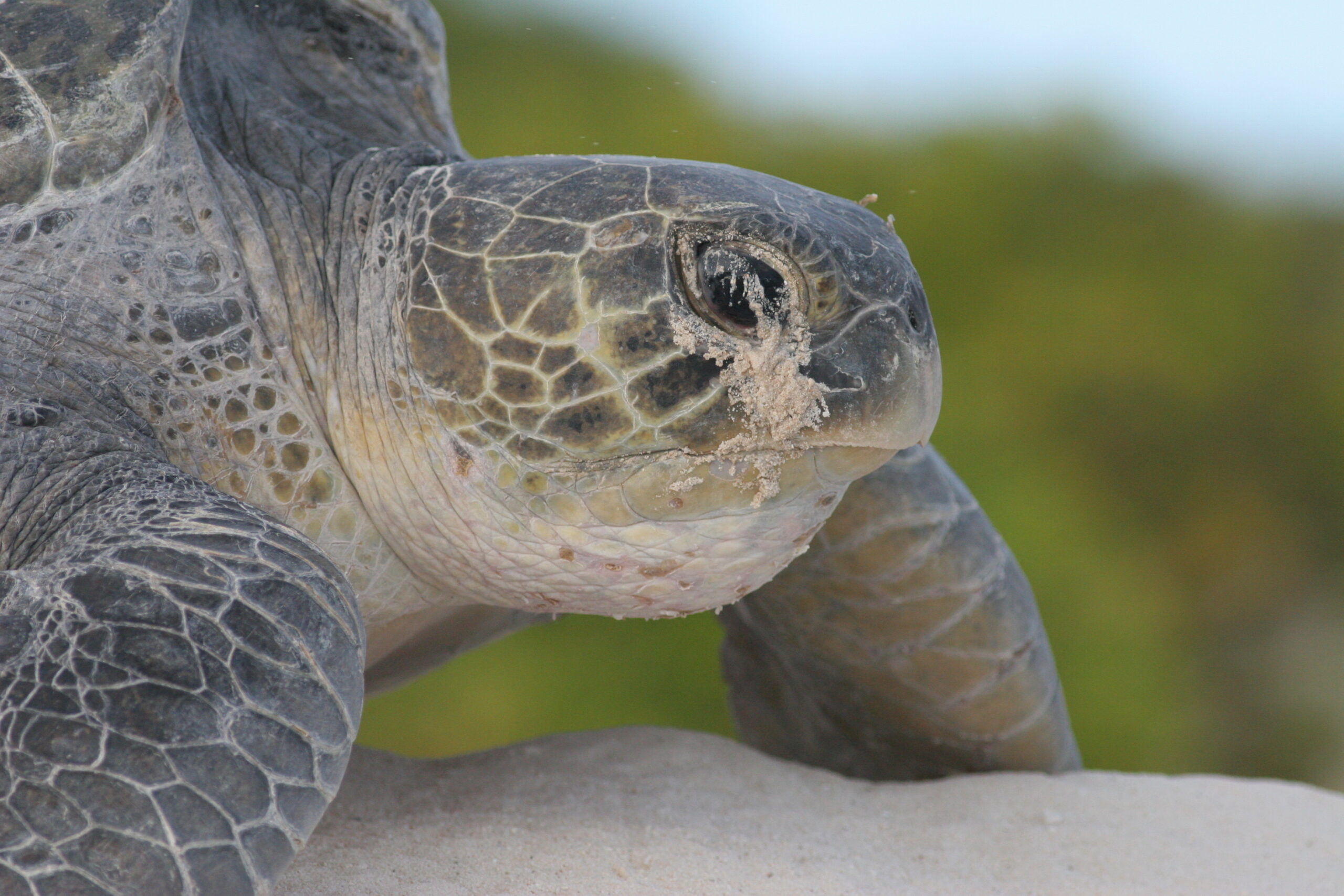
- 60 juvenile and adult green turtles (Chelonia mydas);
- 30 juvenile hawksbill turtles (Eretmochelys imbricata).
Depending on the individuals and species, the tags may transmit for periods ranging from one and a half years to more than 10 years. The data collected will enable comparisons of habitat use around Europa between species and across months, seasons and years.
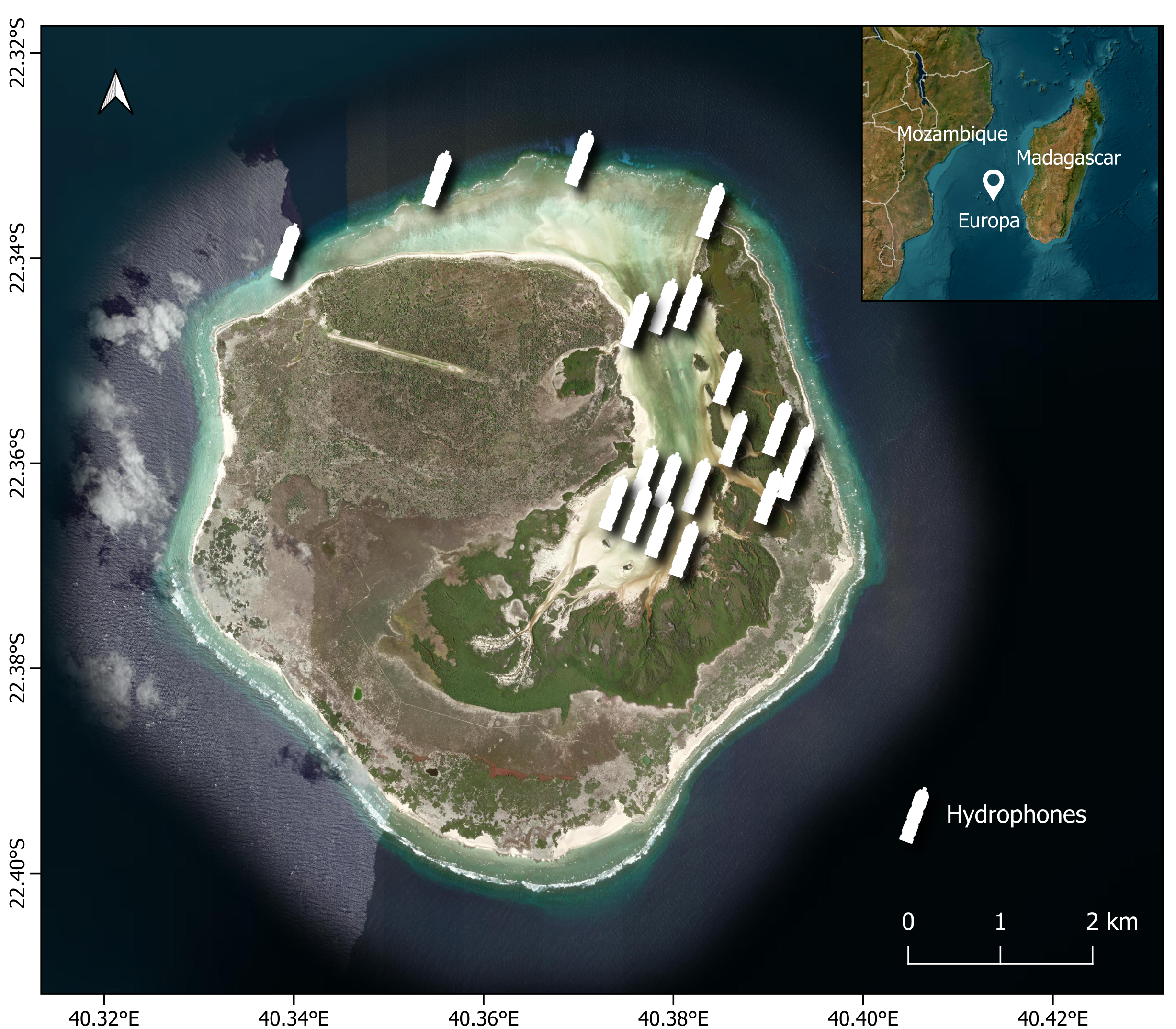
Figure 4 : Planned hydrophone locations in Europa’s mangrove, on the reef flat and along the reef slope.
Understanding connections between territories
Over time, data analysis will enable comparative mapping of how these species use the available habitats in Europa’s waters at monthly, seasonal, annual and multi-year scales. Beyond movements around Europa, the scientists will seek to identify potential regional migrations and connections with other sites, both protected and unprotected, in the southwest Indian Ocean.
These findings will help improve our understanding of ecological connectivity across the BRIDGES regional study site: how do animals use different habitats? Which areas do they visit throughout their lives? To what extent do their movements connect different conservation sites? This knowledge is essential to inform regional biodiversity protection strategies.
The mission brings together the MARBEC joint research unit (Ifremer, CNRS and IRD), TAAF, the South African Institute for Aquatic Biodiversity (SAIAB), Kélonia (Réunion’s sea turtle observatory) and the Centre for the Study and Discovery of Sea Turtles (CEDTM). It also contributes to the HOME project (Habitat Of Marine turtlEs), led by CEDTM and funded by the INTERREG VI Indian Ocean programme.
More news News