International research and sustainability: how to reconcile scientific quality, benefits for societies and preservation of the habitability of marine ecosystems?
International research projects generate significant environmental impacts, often undocumented, and produce social benefits that are rarely equitably distributed. How can we find a balance between the production of scientific knowledge, the reduction of the ecological footprint and the improvement of social impacts, in particular in the context of collaboration with partners from the South.? What obstacles and levers influence the practices of scientists to achieve this balance? And how can we get them to question their core business and the practices intrinsic to their work, while supporting them towards more resilient working methods?
Lucie Pellissier’s PhD thesis: identifying the levers and obstacles of transformative marine research
Since November 2025, Lucie Pellissier has been conducting a thesis as part of BRIDGES IMPACT, one of the six targeted projects of BRIDGES, which aims to observe, analyze and evaluate the transformations induced by the actions of the program, while studying and reducing their environmental impacts. This approach responds to the desire of the French National Research Agency (ANR) to better document the ecological footprint of scientific projects.
The main challenge of his work is to identify the dynamics of behavioural change necessary to reduce the environmental footprint of an international research program, without compromising its scientific objectives or its contributions to society. The objective is also to design concrete and transferable solutions, reconciling scientific rigour, frugality and positive benefits for the societies concerned.
The doctorate is structured in two phases:
- First phase: analysis of the levers for reducing the carbon footprint of academic research using data from the results of the Ma Terre workshops.
- Second phase: study of the specific practices of the BRIDGES program, which brings together several hundred researchers, mainly based in mainland France and the South-West Indian Ocean. This phase includes:
- Methodological support for decision-making to promote scientific practices with a lower impact;
- The integration of socio-environmental indicators to link ocean–climate interactions, marine biodiversity and North–South scientific collaborations.
- Methodological support for decision-making to promote scientific practices with a lower impact;
By reducing the environmental footprint of research and rebalancing its priorities between scientific quality, social utility and habitability of marine socio-ecosystems, this thesis proposes to make scientific practices a direct lever for ocean conservation. It argues that preserving the ocean means rethinking the way knowledge is produced, integrating environmental, social, climate and blue justice issues, and recognising the central role of human societies.
The research work will be promoted through a dissemination strategy articulated around the Sciences with and for Society concept, promoting the co-construction of knowledge and wide accessibility of the results to the academic community, field actors and the general public.
Sources for the image: UNEP (2017, 2021) Emissions Gap Report, (2021) Adaptation Gap Report, SEI (2021) Production Gap Report, IPCC (2021) Sixth Assessment Report.
© 2021 United Nations Environment Programme
Focus on: My Earth in 180 minutes: an educational tool to rethink scientific practices
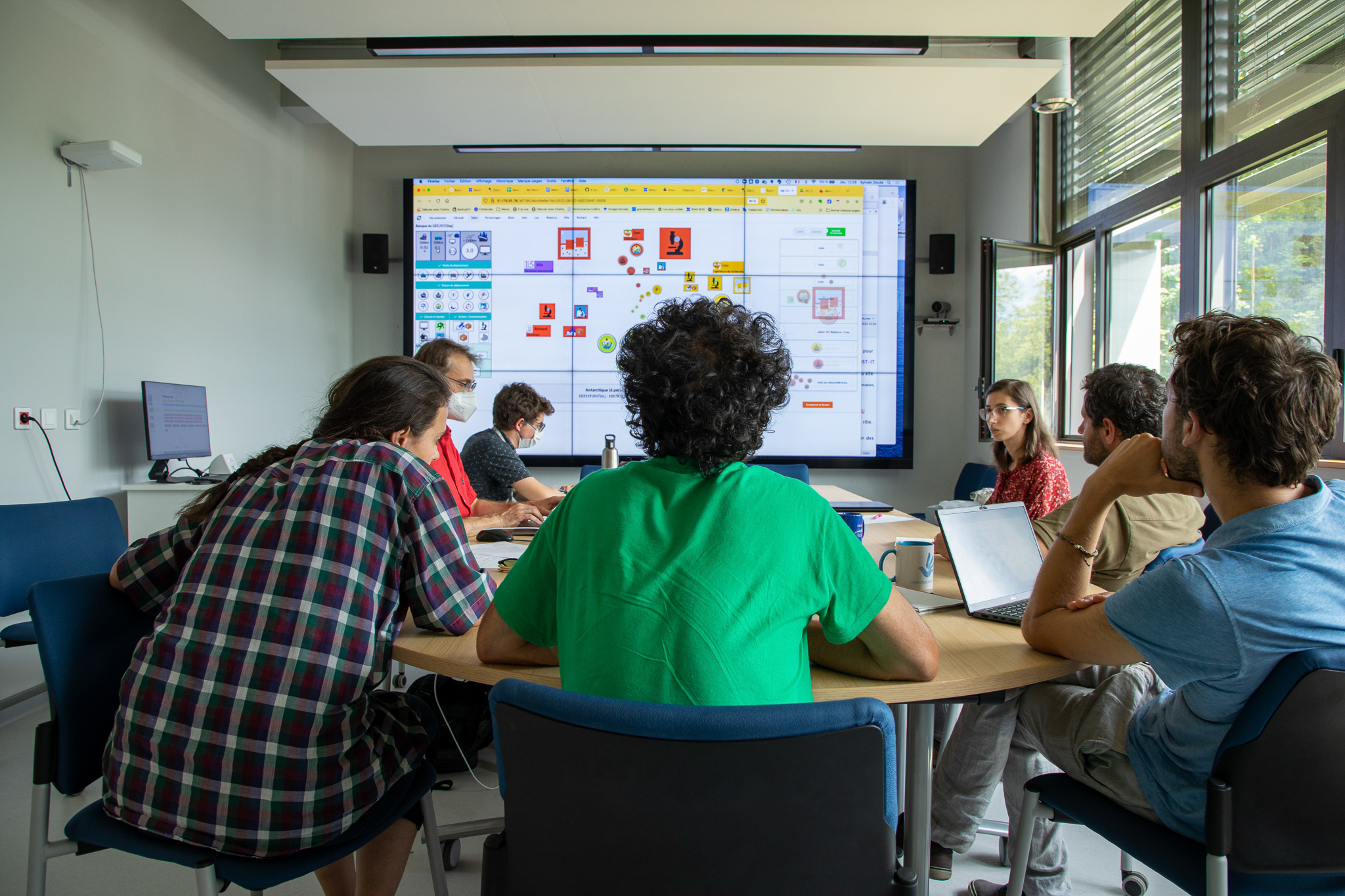
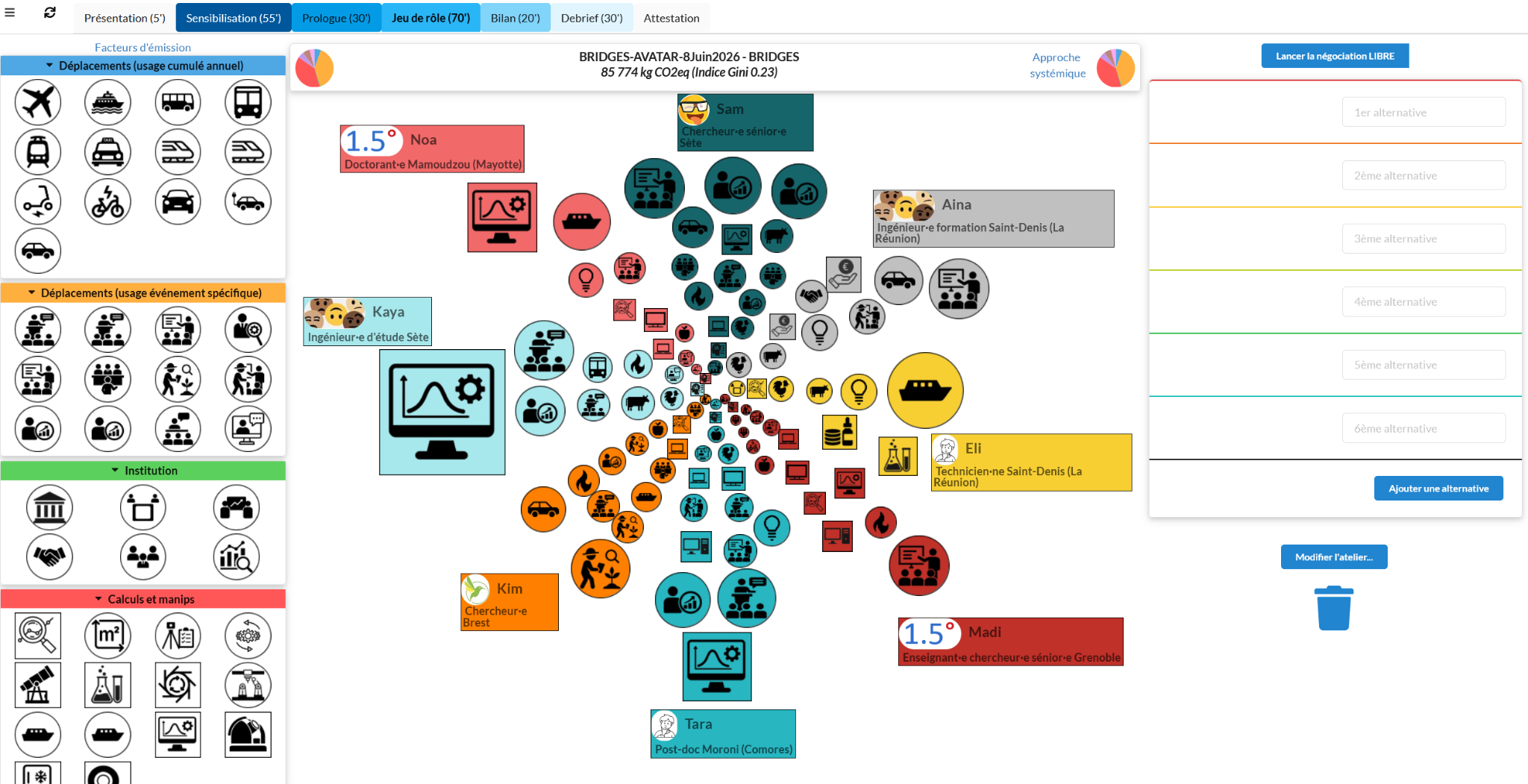
The serious game My Earth in 180 Minutes is a central educational and participatory tool in this PhD thesis. Designed as a space for discussion, it allows university communities to understand their collective carbon footprint and to co-construct reduction trajectories, in a logic of awareness-action, commitment and equity. It is a role-playing game where each character has tokens associated with their work activities, proportional in size to the associated carbon footprint. Players must negotiate and offer alternatives, including moving or splitting tokens, to achieve a goal of reducing their carbon footprint by 50%. These workshops are tailored to BRIDGES’ core activities and needs.
Biosketch
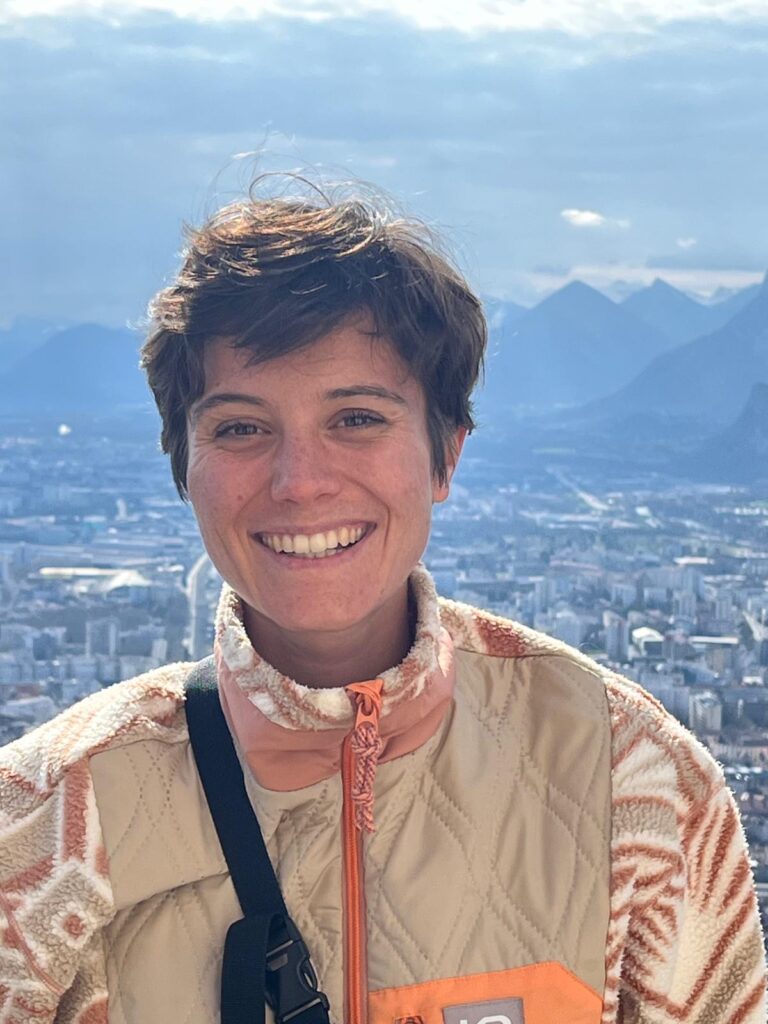
A PhD student since November 2025, Lucie Pellissier is working on the transformations of marine socio-ecosystems as part of the BRIDGES research program. A general engineer by training, with a double degree in ecological transitions, she is interested in the links between the ocean, climate regulation and the transformations of human and scientific practices.
Her end-of-studies internship focused on the methodological improvement of Carbone 4’s MyCO2 personal carbon footprint calculator. It gave rise to an interdisciplinary dissertation combining sociology, economics, philosophy, psychology and neuroscience in order to study the impact of awareness-raising measures on behavioural changes and the reduction of the individual’s carbon footprint. This experience has strengthened his interest in ocean-climate issues.
An International Volunteering in Business in Peru then led her to work on geographic information systems at the interface between technical and environmental teams. A year of travel to Latin America has gradually clarified her professional project: to contribute to the conservation of the ocean by integrating the dimensions of blue justice. The meeting with artisanal fishermen’s families in northern Peru particularly marked this reflection, revealing the close links between social and environmental issues.
Today, her research is part of an interdisciplinary approach at the interface of the natural sciences and the humanities and social sciences, with the objective of contributing to the conservation of the Ocean. It pays particular attention to bio-cultural approaches and local social benefits, with the ambition to eventually develop fieldwork as close as possible to coastal ecosystems and communities.
Additional Information
Thesis title: “Characterization of obstacles and levers for the transformation of marine socio-ecosystems in the southwest Indian Ocean”
Supervisors and co-supervisors: Nicolas CHAMPOLLION, co-coordinator Ma Terre, research on the future and global evolution of glaciers; Nicolas GRATIOT, co-coordinator of Ma Terre, is researching the impact of cohesive sediments on ecosystems.
Lab: Institute of Environmental Geosciences (IGE) of Grenoble
Learn more
Initiatives to reduce the environmental footprint of research
Teran-Escobar C., Becu N., Champollion N., et al. (2024). A pilot randomised controlled trial comparing the effectiveness of the MaTerre180’ participatory tool including a serious game versus an intervention including carbon footprint awareness-raising on behaviours among academia members in France. PLOS ONE, 19(3), e0301124.https://doi.org/10.1371/journal.pone.0301124
Gratiot N., Klein J., Challet M., Dangles O., Janicot S., Candelas M., et al. (2023). A transition support system to build decarbonization scenarios in the academic community. PLOS Sustainability and Transformation, 2(4), e0000049.https://doi.org/10.1371/journal.pstr.0000049
Macfarlane A. R., Smith M. M., Calmer R., et al. (2025). Environmental impact assessments of scientific fieldwork as a path to sustainability: a case study from the MOSAiC expedition. Elementa: Science of the Anthropocene, 13(1), 00035.https://doi.org/10.1525/elementa.2025.00035
Corneyllie A., Walters T., Dubarry A. S., et al. (s.d.). Doing conferences differently: a decentralised multi-hub approach for ecological and social sustainability.
Footprint of research related to the Global South
Poupaud M., Fache É., Castella J.-C., Antona M., Blanco J., Carrière S. M., et al. (2025). Diversité des points de vue face à l’empreinte carbone de la recherche en partenariat avec les Suds. Natures Sciences Sociétés, 33(1), 80-88.https://doi.org/10.1051/nss/2025028
Fanchette S., Letourneur N., Pannier E., Paloc U. (s.d.). The ambivalence of low carbon research with partners in the Global South.
Socio-environmental indicators related to the ocean
Blythe J. L., Claudet J., Gill D., et al. (2026). The Ocean Equity Index. Nature.https://doi.org/10.1038/s41586-025-09976-yPreprint (2025). Environmental Studies.https://doi.org/10.31223/X5Z126
More news News