BRIDGES x SIOMPA 2026 Training
Theme: Marine Connectivity in support of conservation in the Southwest Indian Ocean
📍Wits Rural Facility, South Africa | 📅September 28th to October 2rd
Organized in partnership with the MERMOZ and CO-EXISTENCE SIOMPA projects, this training course will bring together international experts to provide participants with an interdisciplinary understanding of ecological connectivity in marine conservation.
Educational content
General aim: Introduce participants to key concepts, types, and processes underlying marine connectivity. Participants will explore how connectivity operates across spatial and temporal scales and understand the implications for effective marine management, with a particular attention to the Southwest Indian Ocean context.
- What is marine connectivity: concepts, context, and definition
- Introduction to oceanography in the SWIO
- Corridors and barriers to marine connectivity in the SWIO
Speakers
- Issufo Halo, Scientist, Department of Forestry, Fisheries and the Environment, South Africa
- Christophe Lett, Scientist, French National Research Institute for Sustainable Development (IRD), France
- Nicolas Barrier, Research Engineer, French National Research Institute for Sustainable Development (IRD), France
General aim: Introduce participants to computational and analytical approaches for modeling and visualizing connectivity patterns. Sessions will cover Lagrangian and ocean circulation modeling, network-based representations of connectivity, and the use of these tools to synthesize and communicate connectivity data across scales.
- Introduction to ocean circulation modelling
- Modeling larval dispersal and connectivity
- Deriving indicators of connectivity from models
Speakers
- Issufo Halo, Scientist, Department of Forestry, Fisheries and the Environment, South Africa
- Christophe Lett, Scientist, French National Research Institute for Sustainable Development (IRD), France
- Nicolas Barrier, Research Engineer, French National Research Institute for Sustainable Development (IRD), France
General aim: Introduce participants to approaches commonly used to measure connectivity, including ecological (telemetry and relatedness), and evolutionary (multigenerational divergence) connectivity.
- Ecological vs Evolutionary Connectivity: advantages, disadvantages, and interpretations
- Relatedness vs FST: how to calculate and interpret them
- Different tagging methods and relative measures of connectivity
- The importance of including several connectivity metrics in Marine Spatial Planning
Speakers
- Romina Henriques, Senior Lecturer, University of Pretoria, South Africa
- Taryn Murray, Scientist, South African Institute for Aquatic Biodiversity (SAIAB), South Africa
General aim: Explore how knowledge of marine connectivity is – or could be – used to support conservation planning, policies, and conservation practice.
- Functional connectivity indicators and metrics
- Systematic conservation planning and connectivity: theory and tools
- Case studies
Speakers
- Rodolphe Devillers, Scientist, French National Research Institute for Sustainable Development (IRD), France
- Joseph Maina Mbui, Associate Professor, Macquarie University, Australia
General aim: Working in interdisciplinary teams, participants will integrate the concepts and methods acquired throughout the training to address a real-world connectivity challenge in a marine management context. Teams will develop and present a connectivity-informed proposal. Engagement with practitioners or managers may be incorporated to ground proposals in operational realities.
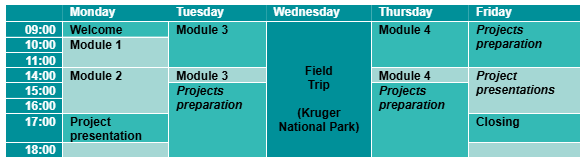
Training program
The speakers
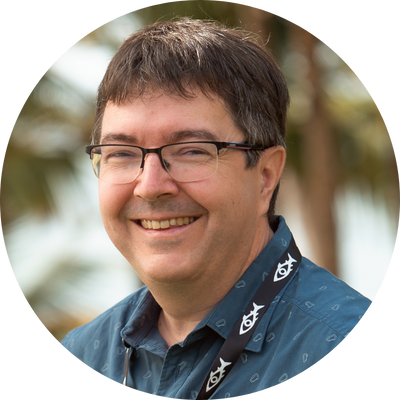
Rodolphe Devillers
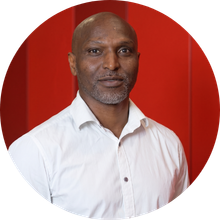
Joseph Maina Mbui
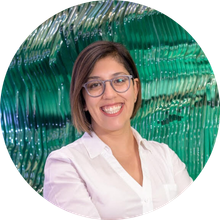
Romina Henriques
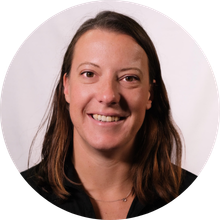
Taryn Murray
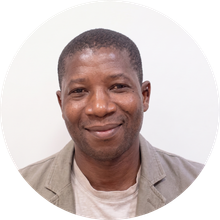
Issufo Halo
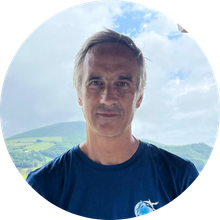
Christophe Lett
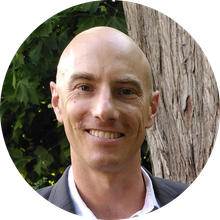
Nicolas Barrier
Practical information
In person attendance is required from Sunday September 27th at 4pm to Saturday October 3rd, 2026 at 9am
Registration, including courses, accommodations, and meals, is covered by BRIDGES. Travel to the venue is at the participants’ own expense.